The Whispering Hand
Eltoir’s dead are walking north. Lucien Avernel and a hired curse-breaker follow them into the hills.
© 2026 Michael Gabriel Viloria. All rights reserved. Copyright & permissions
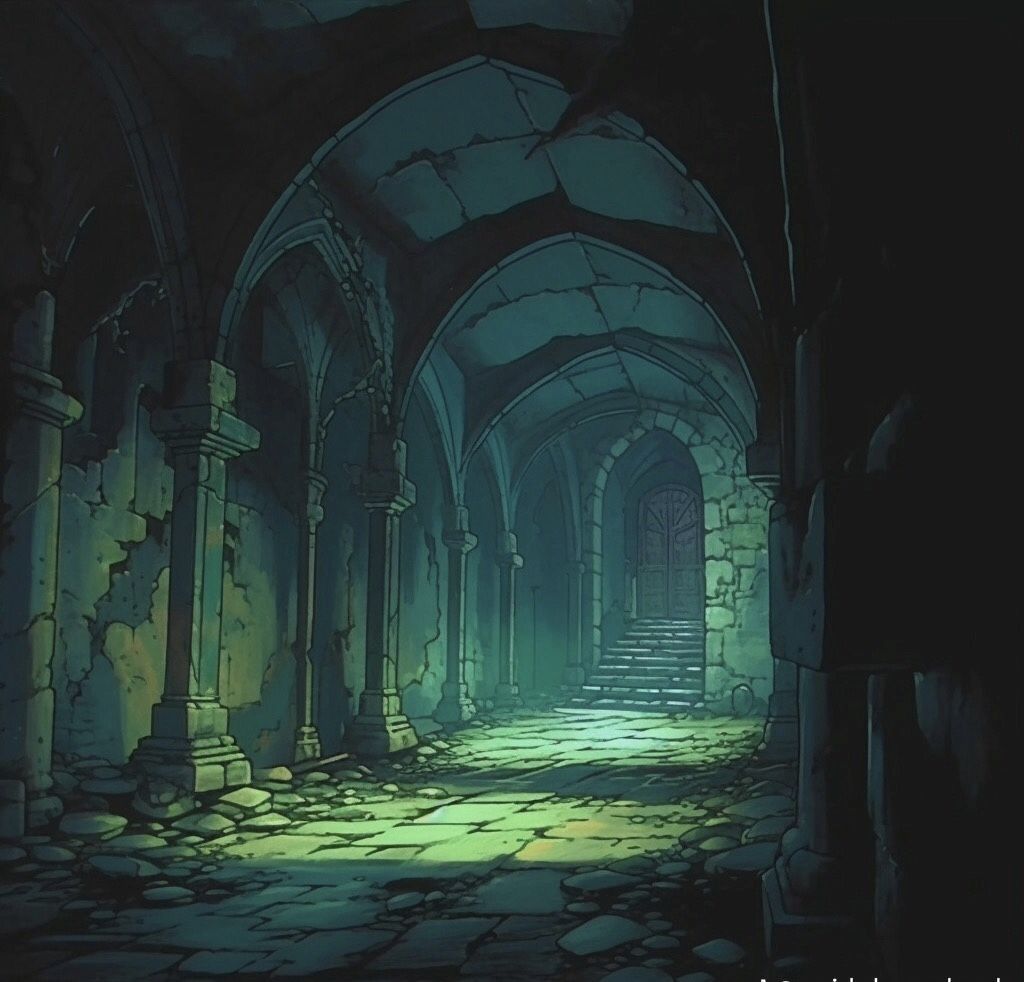
A Lucien Avernel story. Eltoir, Pharos. Year 0 of Pax Stella.
"Don't touch her. She's paid for."
A crossbow bolt is an inch off the hinge of my jaw. Whoever holds it has stood among the dead so long she's gone nearly as cold as they are. That's why I missed her. A quarter of an hour I've been in Eltoir's sky-house listening for heat, and the only warm thing in it was the brazier.
I take my hand off the shroud.
"Yours?" I say.
"Forty silver's worth. Step back. Slowly, if you've got slowly in you."
I step back. The bolt comes with me.
"You can take that off my jaw," I say. "It's had a hard enough year."
"It'll have a harder one."
The sky-house has no roof. That is the point of it. Eltoir buries nobody for nine nights. The dead lie on stone biers with their faces to the sky, so that each can find its star before the ground takes it. The priests who raised me would have called it heathen. The army would have called it a drainage problem. It smells of clove oil and of the thing the clove oil is there to hide.
She comes round into the starlight. Short, the top of her head level with my collarbone, in a hunter's coat so pocketed it looks quilted. Dark hair cut short and ragged, close at the nape and over the ears, longer on top, where it falls into her eyes and she shoves it back with the heel of her hand. She cut it herself, by the look of it, with whatever was nearest. A war-pick on her hip, spike on one side of the head, hammer-face on the other. She's chewing clove, the dry bud. I can smell it over the oil.
She looks at my collar.
"What's that?"
"A sock."
"Why is there a sock on your collar?"
"It's dark."
She hooks the wool off with the bolt tip. Underneath, the star goes on pulsing, bronze and slow, as if it has only been waiting to be asked.
"Oh, Hound's teeth," she says. "Bronze. They sent a Bronze."
"Lucien Avernel. Virelan—"
"I know what you are. Your lady with the red braid sends you round like the knife-grinder." She lowers the bolt with visible regret. "Twenty-two days I've been in this house. The Reader wrote to Seinholden first, and hired me the morning after, because she's a sensible woman and she'd heard about your post."
"What about it?"
"It's slow." She kneels at the bier she was working. "And now you're here, and in the morning the families will remember they don't have to pay me, because you come free."
"Somebody pays."
"Not them."
She takes a little hooked knife from her sleeve and opens the pad of her thumb. The thumb is a lattice of white scars, as though it has been signed and resigned for years. She presses it to the brow of the dead man on the bier. It leaves a red print the size of a copper.
"Rime," she says, before I ask. "Sets the next time the Lantern clears the ridge. Mark him at dusk, he sets tonight. Mark him after the Lantern's up, he waits for tomorrow's. Till it sets it's only blood, and a warm hand can rub it off. After, he's winter till spring, and nothing walks him anywhere."
"Walks him where?"
"North." She moves to the next bier. "Anything that dies in Eltoir gets up on its third night and walks north. Nine since midsummer. Families wake to an empty bier and find the shroud on the road a mile out, folded. Folded." She cuts the thumb again where it has closed. "That's the curse. I break curses. Till I find who laid it, I do this."
She goes down the row. She says a name at each bier and a price after it, under her breath, like a carter counting sacks. Hessil, forty. The cooper's boy, forty. Old Marrin, forty. At the last bier, a young man with his hands crossed over a hunting horn, she marks the brow and says the name and doesn't say a price.
I let that go by.
"Forty a head for the freezing," she says, without looking up. "The curse is another price."
"I'm not after your work," I say. "I want the people doing the raising."
"Same people."
"Different job."
"Is it." She wipes the thumb on her coat, where it has wiped a great many times before. "There were eleven Hexcutters in the Kennel at Harrowmere before the sky came down. There's five now. The dead didn't do that. Every town from here to the coast has learned to write your lady a letter and wait, and while they're waiting they don't send for us." She looks at the star again. "Kailyna. Harrower, Order of the Hexcutters. Since you'll ask."
"I work alone, Kailyna."
"So do I," she says. "We'll get on."
She means the opposite. I don't explain what I mean, which has to do with what comes up in me halfway through a fight, and who happens to be standing close when it does.
Galen read my report on Dire's Reach in the time it took him to drink half a cup of tea. Then he set it face down and asked me one question.
"How is the dog?"
I didn't know.
"Next time," he said, "find out before you leave."
The Orinar have withdrawn the binding cord for revision, which Galena says is what Syndra calls it when something has embarrassed her in front of a ferret. In its place I carry a disc of grey Orinar glass wrapped in black silk. Press it to the skin over a living spine and the body sleeps until an Orinar wakes it.
"It keeps a prisoner exactly as it finds him," Syndra told me, in the tone of a woman who'd rehearsed the sentence. "Nothing gets in."
The dispatch read ELTOIR, PHAROS. "THE WHISPERING HAND." ILLEGAL RESURRECTION. TIER II, PROVISIONAL.
I packed two lamps this time, and a flask of oil, and seven pairs of socks.
Reader Imsa Halvane keeps Eltoir's law from the top of a tower full of brass. She's small and round and exhausted, with ink to both wrists, and she has to lean round her orrery to see us.
"Two of you," she says, before either of us sits. "I read it last night. Two lights in the Hound's mouth. I'm sorry. I know neither of you wants it."
"Is that good?" I say. "Being in its mouth."
"That depends on the hound."
"Your sky's wrong," Kailyna says.
"It frequently is. We've found it costs more to ignore it." The Reader turns a brass ring on the orrery a quarter-turn with one finger. "And separately you've given me twenty-two days and nine walked dead."
"I don't need Eltoir's leave," I say. "Not under the Accord."
"No. You need my roads, my people's doors and my dead. Those are mine." She doesn't smile. "Article Sixteen, five. The Circle had all of us learn it in the spring. You don't replace my magistrates, Sentinel. You work beside them, and this morning the magistrate would like you to work beside her."
It is the second time this month somebody has used the Accord to tell me no. They're getting good at it faster than I am.
"And my fee?" Kailyna says.
"The families will pay what they promised. I'll see to it."
Kailyna turns to me. "Hear that? Still worth something."
"I never doubted it," I say. "I just didn't want to share."
The Sky-Warden is a long, stooped, gentle man with ash in the creases of his thumbs, and he talks to the dead.
He goes bier to bier, bends to each, says something too low for anyone but me to hear, then thumbs a print of ash onto the brow so the star can find the face. Pharosians lower their voices under an open sky, so the Warden whispers, and so does everyone in here, me included.
Aubel Thenn. Thirty years at the sky-house. He has laid out everyone who died in Eltoir in that time, the Reader told me, and his own wife among them.
"They wait so patiently," he says to me. "My people. Nine nights, and never a complaint. Your Accord says the dead must consent, Sentinel. I've sat with the dead thirty years. They're very agreeable."
"I've met some who weren't."
"Then you met them too soon."
I walk the rows, listening for heat. Three biers give off a little warmth from underneath, about what a hand gives through a glove.
Kailyna sees me stop. She pulls her sleeve over her fingers, reaches under the bier, and comes out with a river stone the size of a loaf. The core of it is still warm from a fire.
"You warm them," she says to the Warden.
"So they aren't cold while they wait."
"You thaw my marks."
"Your marks are a desecration the Reader has asked me to bear. I bear it." His voice doesn't rise, because nothing in here does. "I'm not obliged to help it."
He thinks the Hand will be in the old silver workings to the east. "They'll want the dark," he says. "People who do that kind of thing generally do."
I thank him. The hem of his robe is stiff to the shin with red mud, the iron-red of the north ridge. Eltoir's terraces are slate and the east road is chalk. Everybody walks somewhere.
Outside, Kailyna spits a clove into the gutter and doesn't mention the stones. I don't mention the mud.
The shrouds are a mile out on the north road, where the slate gives way to gorse. The families couldn't bring themselves to take them home, so somebody built a cairn and laid them on top, nine of them under a stone.
I lift the top one off. Good linen, the family's star stitched in blue at one corner. Folded in three along its length, the ends turned under, the starred corner brought round to sit on top.
"The sky-house fold," Kailyna says. "Every woman in Eltoir folds a shroud that way."
"The dead don't."
I shake it out and fold it again to be sure I have it. It takes me three tries. Whoever did it first didn't need three. They've done it a great many times, and they can't stop doing it properly even when they're stripping a dead girl on a roadside in the dark.
"The star's stitched on the shroud," Kailyna says. "Take it off and the star can't find them. Then they're nobody's. Then they're his."
"Are you registered?" I say.
"For what?"
I look at her thumb.
"Harrowers don't register. The Hexcutters were asked three times this year. Very polite letters. We used them to light the stove. The Gravelines registered. Half of them. The other half stopped speaking to them." She looks up at me. "Are you?"
"I'm sworn."
"That's worse. You've a book at Seinholden that writes you down every time you sin. I've a thumb. I know which I'd rather."
"The book doesn't bleed."
"Neither does your conscience, I'd guess. Not with a book to do it for you."
"The book has three lines on me," I say. "My conscience has more."
She walks back toward town without answering, which is the first time all day she's let me have the last word.
The house of Nessa Corl has a brass star-wheel on its doorpost, like every house in Eltoir, its pointer set on the household's dead. Since the night before last that has been Nessa's mother.
Ysolde Corl. Seventy-one. Her heart, in her chair, with her mending in her lap. Tonight is her third night.
"I'll be at the sky-house at dusk," Kailyna tells the daughter. "Same as the others. She'll not feel it."
"Don't mark her," I say.
They both look at me.
"The Hand don't come to the sky-house. They call, and the dead go to them. Nobody has followed one." I keep my eyes on Nessa, because it's her mother. "Let her walk. We'll follow. She'll take us to whoever's calling."
Kailyna laughs, once, without anything in it. "You're asking a woman to lend you her mother."
"Yes."
Nessa Corl has a baker's forearms and flour still in the lines of her knuckles, though she can't have baked since. She goes to the doorpost and turns the star-wheel back a notch and forward again, as you'd straighten a picture.
"Will you bring her back?" she says.
"Yes."
"He can't promise you that," Kailyna says.
"You'd have frozen her."
"Yes."
"Then he's offering more than you."
"He's offering what he hasn't got." Kailyna pulls her coat closed. "Your mother, your coin. I'll mark the rest."
At dusk I fill both lamps and check the wicks. Kailyna watches from the sky-house step with her arms folded.
"Lamps," she says. "To a night hunt."
"Two."
"They'll see you from Suldamin."
"Saves them writing."
"Why lamps?"
"The blade likes them."
"The blade likes them," she says, to the sky, which in Pharos is as good as putting it in writing. Then, flatly, as she says prices: "When we find them, I kill them."
"I take them."
"Take them where? Seinholden? So they can sit three years in a warm room while your Orinar argue about what to call it?"
"Yes."
"They walked the Moren boy past his mother's window in his shroud. She was at the glass." Her voice doesn't change at all. "Nine years old."
"Then they'll answer for it."
"To who?"
"Someone who didn't watch."
"Someone who didn't watch," she repeats. "That's the trouble with all of you."
She comes down off the step and unhooks the pick from her belt, hammer-face out.
"Before I walk a night hill with anybody, I measure them. Hexcutter rule. Pick that up."
"I'd rather not cut you before the work."
"You won't."
"I'm six foot four. You can write it down."
"Pick it up, Bronze."
I draw Aetherfang and leave the leather sleeves on both blades. She watches me do it and doesn't comment, which is a comment.
She doesn't circle. She plants.
Feet wide. Knees soft. All her weight sunk into the slate like a post set in a hole. Pick held short. She waits for me to come, and I find I don't like it.
I come anyway. Faster than a man my size has a right to, and I've watched men find that out too late. Upper blade high at her eyes. That's the feint. Lower blade low for the knee. That's the cut.
She doesn't step back. She turns, half a step, from the hips. The lower blade passes her knee by a finger's width. The hammer-face taps me under the short ribs.
Tap. Not hard. Exactly where it needed to be.
"One," she says.
Again. This time the wheel. The haft runs through my hands as it turns, so the reach changes mid-swing, long on the first pass, short on the second, the upper blade becoming the lower on the way round. Galen spent the summer teaching me to make it pretty. The army taught me to make it work.
She reads the first rotation. Not the second.
The sleeved curve of the lower blade takes her behind the knee and hooks.
She should go down. She doesn't. She drops her weight onto the hooked leg instead of away from it, and the curve slides off her like water off a roof, and she's still planted, and her thumb flicks.
A drop of blood hits the back of my right wrist.
The arm goes heavy. Shoulder to fingers, all at once, as though somebody has hung a bucket of wet sand off the joint. The haft dips.
"Lead," she says, and touches the spike to the side of my throat. "Two."
I let go with the right hand.
The priests spent four years beating the left hand out of me. It came back.
The haft comes round left-handed and the whole pattern reverses. Upper becomes lower, outside becomes inside, everything she's just finished reading is suddenly written backward. She gets the pick up for the first blade. Not the second. The sleeved inner curve settles against the back of her neck and draws her a step toward me.
And there's a knife point resting very precisely on the inside of my thigh, where the big vessel runs.
"Draw," I say.
"You'd bleed out first."
"I'd have time to think about it."
She looks up at me from about a foot and a half below. Then the knife goes away and so does the blade.
"Where'd you learn to fight like that?"
"Prison yard, mostly. Galen tidied it up."
She shoves the hair out of her eyes and shakes the blood off her thumb. "You're quicker than you've any business being at that size."
"So I'm told. Usually by people on the floor."
"I'm not on the floor."
"No," I say. "You're not."
She nods at my right arm, still hanging off me like somebody else's. "Lead wears off when you sweat. You'll sweat on the hill."
"And if I don't?"
"Then you'll fight left-handed," she says, "which you seem to enjoy."
Eltoir tells time by the Lantern Star. Hard and yellow, it comes up over the ridge in the second hour of the night.
When it clears the ridge, two things happen in the sky-house at once.
All down the rows Kailyna's red prints go white at once, a small sound many times over, like a pond taking its first ice. Twelve dead go hard as stone in the space of a breath.
And at the end of the left row, Ysolde Corl sits up.
She does it the way an old woman sits up in bed when she has remembered the kettle. She unties her own jaw-cloth with fingers that don't bend where fingers bend, stands, and walks past us and out, barefoot, her shroud dragging.
Nessa is in the doorway with both hands over her mouth. Her mother passes close enough to touch her and doesn't turn her head.
We follow.
North. Off the slate, past the airship mast and its mooring lamp, up into the hills. Ysolde never once slows for the slope. At the cairn she stops, and stands a while, and walks on. After the first mile the ground under her feet goes red.
"Iron," Kailyna says, when I look. "The north ridge is all iron."
That's all either of us says about it. Halfway up the hill my right arm comes back to me, a finger at a time.
The path narrows between two outcrops of red rock. Ysolde walks on between them.
The smell comes first. Clove, and under the clove the rest.
They come down off the rocks without a sound.
Six. Shrouded. The nearest still has a brass star-wheel tied at its wrist.
It drops on me from eight feet. No hands out. No bracing. Full dead weight, a sack of grain dropped off a cart. My knee hits the rock. The lamp goes out of my hand and over the edge, and out.
Cold hands on my throat. They lock. There's no letting go in them, because nothing left in them knows how. I get the haft under its chin and lever. The head goes back. Further. Further than a neck goes. The hands don't open.
I drive my forehead into its face. Something flat and old gives. The hands still don't open.
Fine.
I take the arm at the elbow. The edge bites, drags in dried sinew, and binds. I rip it through. The forearm stays on my throat. I peel it off like a collar and throw it down the slope.
Up. Feet set.
Two at once. The wheel. The upper blade takes the first across the chest while the edge is still bright, and it folds where it stands. The same turn brings the lower blade round under the second one's reach and the inner curve hooks its ankle. I pull. It goes down on its back. Boot on its chest, lower blade through the hinge of its jaw, the whole of me in the stroke. Steel grates on rock underneath.
A third steps into the space I've just made.
A bolt takes it in the left knee.
White blooms through the joint from the bolt-head outward, frost racing through the cloth, and the knee locks straight. The dead man's next step doesn't happen. He topples, stiff as a felled post, and his face hits the rock and doesn't bother him at all.
Kailyna is ten feet behind me on the path, planted, reloading. She thumbs a drop of blood into a groove down the side of the bolt-head and seats it without looking.
"Knees," she says. "Always knees. Dead don't care what you do to their heads."
"I'd noticed."
The fourth comes at her. She doesn't move her feet. She turns from the waist, lets its reach go past, drags her bleeding thumb down the spike of the pick and swings. The spike goes in at the base of the skull. Frost blooms out of the wound in a white star. The skull goes like a dropped plate.
She plants a boot on the face to wrench the spike free.
The one I folded gets up.
On top of the left outcrop a figure in grey has a hand pressed over its mouth, over a cloth painted with a white hand, and it's whispering. No words carry. Only the rhythm, steady as a rosary. The dead turn their heads toward it like plants toward a window.
"Up top!" I shout.
Her bolt sparks off the rock a foot wide. It's the only shot she misses all night. She marks it, and doesn't like it.
The whisperer turns a fraction. Ysolde Corl stops on the path. Turns. Comes back.
She walks into me. I don't cut. My forearm goes up to keep her off my throat and she takes it in her mouth. Four teeth left in her head, and she uses all four. She's a small old woman and she pushes like a door in a gale, steady, endless, because the dead don't tire and don't feel the pain that would make them stop. Her breath is cold and full of clove.
I hold her by the shoulders. Her teeth stay in my arm.
Kailyna goes up the outcrop on fingers and toes. The whisper stops in the middle of a word. A body comes off the top of the rock and hits the path at my feet with a sound I'll be hearing later.
Ysolde lets go of my arm. She turns north and walks on, with my blood on her chin.
Kailyna comes down the rock wiping the pick on the dead man's grey robe.
"You let a dead woman chew on you."
"She'd missed three days of meals. I'm not unreasonable."
"Bring her back in pieces. Families get pieces all the time."
"Not from me."
She looks at me for a while in the dark. Then she takes my arm, turns it to the stars to look at the bite, and lets it go.
"You fight like a house falling down a hill," she says.
"Houses don't usually get up again."
"No," she says, going after Ysolde. "That's what I mean."
The old Circle observatory on the north ridge has split down the middle. The telescope is a rusted iron arm the length of a barn, braced on a platform of grating, pointing through the split at nothing.
Ysolde walks in under the arch. We stop at the edge of it.
The dead are standing in ranks.
They fill the floor wall to wall, facing the platform, shrouded and still. Eltoir's nine, and whole villages besides. Somebody has stood them in lines straight enough for a parade ground, and the sergeant in me notes it before the rest of me catches up. Two hundred at least. Ysolde Corl finds a place in the last rank, between a boy and a man in a cooper's apron, and stands.
Constructing armies from unconsenting dead. Article Nine forbids it. Article Twenty-one makes it Tier III, and Tier III means the Executor's Mandate and a joint operation, an Orinar to read the Weave and three Sentinels on the doors. I have a hunter and one lamp. I have the numbers by heart now. They help less than I'd hoped.
"How long to get the rest of them here?" Kailyna whispers.
"Days."
"He'll have this lot up by morning."
"Then we'll have to be rude and interrupt."
Grey robes move among the ranks. Nine of them, mouth-cloths painted with a white hand, each with a palm resting on a dead shoulder as you'd steady a horse. On the platform a tenth stands with its hand over its mouth, and beside it a dead woman in a good blue dress, the only one of the dead up there. The tenth keeps its free hand on her shoulder, as you'd keep hold of somebody in a crowd.
Kailyna watches the nine, chewing slowly.
"Hand to the mouth. Every one. Can't do it without the hand, can they."
"Looks that way."
"Then I'll have their hands." She opens her thumb again. It hardly needs the knife by now. "You have the rest."
Kailyna takes the arch. Back to the wall, the whole floor in front of her.
The tenth begins to whisper.
Two hundred heads turn toward the platform. The necks creak like a field of dry barley in wind.
I set the lamp on a fallen block of the dome and go in.
Open floor, so I go wide. Haft long in my hands, both blades out at the full reach of the wheel. The edge is bright, and the first three go down in two turns. Upper, lower, upper. Each one folds and stays folded.
The fourth is a big man in a smith's apron. The blade goes in at the collarbone and stops. Not bone. Him. Two hundredweight of dead smith leaning into the steel with no reason to stop leaning. The jolt runs up both forearms to the elbow. My heels skid. The haft takes the weight and holds it, humming, and I turn my hips and give it all back through the other blade. It takes him under the arm and out through the far shoulder, and he comes apart in two directions.
A dead woman walks through the lamp.
Glass. Oil. A line of fire across the floor, and then it's out.
Dark. Grey. Sixty feet of grey and two hundred shapes in it, and the edge already dulling. The next one I hit doesn't fold. It staggers, and comes back.
White light.
Kailyna has a star-salt flare going in her fist, spitting, stinking of sulphur. She throws it into the middle of the floor. "Stay in my light, Bronze!"
I stay in her light. The edge drinks it.
Fold. Fold. The edge greys again.
Across the floor a whisperer lifts his hand toward his mouth and Kailyna's thumb flicks from twelve feet away. The drop takes him across the knuckles. His hand drops to his side, heavy as a sack of nails, and stays there. He stares at it. He tries the other one. Her thumb flicks again.
Lead. Both hands. He opens his mouth to whisper anyway and nothing in the room listens to him.
That is the cleverest thing I've seen anyone do with a cut thumb.
She's already turning, planted, for the next one. A drop. A drop. Each whisperer she reaches stands with his arms hanging, looking at his own hands as if they've been stolen.
She can't reach them all.
Off to my left a woman kneels with a hand on a dead boy's mouth, and the three I folded behind me get up. I take her across the side of the head with the haft. She comes up on one elbow with blood in her hair, puts her hand to her mouth, and the three get up again.
Every one I leave breathing puts the dead back on their feet.
So I stop leaving them.
A man in grey comes at me with a knife. I go inside it, close enough to smell his teeth, and open his throat with the back-stroke on the way out. A woman lifts both hands to her mouth. I take her before the first word. Another runs for the arch. I don't chase. He runs straight into Kailyna's pick, and she doesn't move her feet to meet him either.
One of the men she's leaded looks at me across the floor, both arms hanging dead from the shoulder. He smiles behind his painted cloth, bends his head to the knife thrust through his belt, and drags his own throat across the edge.
He goes down. Ten breaths. He gets up with the smile still on him, the throat still open, and his arms working again, because the dead don't carry curses meant for the living.
Dead now. Doesn't count as killing. I take him apart. Knee. The edge screeches off the cap and bites on the second stroke. Knee. Shoulder. He keeps coming on what's left, dragging himself on his elbows, and I have to set my boot on his chest to pull the blade free.
Two more of the leaded ones see what he's done and go for their own knives.
"They're doing your job for you," Kailyna calls.
"I'd like it noted that I'm against it."
I go wide to clear two at my left. It's slow. My wrists are still full of the smith. The wheel comes round a half-beat late, and for one breath my back is open to the room.
The room takes it.
Five at once, from behind. The full weight of them. I go down with my face in the floor grit and they settle on me like rubble. Hands in my hair. Teeth in the leather at my shoulder. Something heavy and cold across my neck. I can't lift my head. I can't get the haft under me.
"Bronze!"
"Busy."
The door in my skull opens.
Heat. Out of the middle of me, down the arms, into the hands. The veins on the backs of my hands go black. My face is hot from the inside. The weight on me hasn't changed and it's lighter.
I get one knee under me. Then the other.
I stand up with five of them on my back.
They come off. The first I take by the shroud and swing into the second, and they go down together. The wheel takes the third at the neck and the fourth at the hip on the same turn. The fifth has its teeth in my coat. An elbow through its face, then the haft, then my heel when it's on the floor, and the planar pulse goes down through all of it into the stone.
Then I go through the rest.
Wide again, because there's room now, and the slowness has gone out of my wrists as if it was never there. Two on every turn of the wheel. A dead man in a miller's smock gets inside my reach and I throw him one-handed into a fallen block of the dome, and the block moves. A whisperer behind him gets his palm halfway to his mouth before the lower blade opens him from hip to collar. Somebody close by is making a low, steady sound, very pleased with itself. The army used to call it laughing. It's me.
It's good. Nobody at Seinholden has ever asked me about that part.
Kailyna's flare is guttering. She's left the arch. In what's left of the light she's ten feet off, pick raised, not moving, looking at my eyes. Her lips have gone blue at the edges. Her right hand is white to the wrist. She's still standing in exactly the stance she started in.
"Your eyes went," she says.
"They do that."
"I liked it."
There isn't time to do anything with that.
The last whisperer on the floor is a girl. Fourteen, perhaps. She drops her knife and puts both hands flat over her own mouth and holds them there, knuckles white, looking at me over them.
The heat has an opinion about her. It's the same opinion it's had about everybody tonight.
Kailyna's pick comes up.
I catch the haft above her hand.
"She's whispered too," Kailyna says.
"She's stopped."
"She raised the Moren boy. I froze what was left of him. He was nine."
The girl doesn't take her hands from her mouth.
"She's stopped," I say again.
Kailyna looks at me. I don't let go. In the end she does, and turns away to light another flare with fingers shaking from the cold now as much as anything. I bind the girl's wrists with her own painted mouth-cloth and sit her against the wall.
On the platform the whisper hasn't stopped once.
The iron stair is rusted through in places. It groans under me and drops rust like red snow.
The dead woman in the blue dress comes down the stair to meet me.
She's been dead a long time, longer than anyone on the floor. Somebody has kept her well. She takes the stair at a run and hits me at the turn, and the rail gives behind me, and for a moment there's nothing at my back but forty feet of dark and two hundred upturned faces.
I catch the upright with one hand. It bends. Holds.
She claws at my eyes. I turn my face into my shoulder, run my grip down the haft until I'm holding it a hand's width from the lower blade, short as a knife, and come up under her. The inner curve of the upper blade takes her round the waist. I lift. Over the rail. Down. She hits the floor among her neighbours and doesn't get up, because the man on the platform has stopped whispering to her and gone back to the others.
He stands at the rail with his hand over his mouth, whispering to two hundred dead at once. The ranks below have started to shuffle. Step. Step. Toward the door, toward the south, toward Seinholden.
He hears me on the grating. He doesn't turn. The voice behind his hand is soft and even, the sky-house voice.
"You can't arrest the dead, Sentinel."
"Good thing you're not one of them."
Haft.
It takes him in the ribs. The planar pulse goes through him and the whisper snaps off short, and on the floor two hundred bodies stagger like passengers on an airship deck in a gust.
He reaches for his mouth again.
The wheel, short and tight. The lower blade's inner curve catches his wrist on the way past and the turn carries it on, up and back, and his elbow bends where elbows don't. I follow it down. Face-first onto the grating, my knee between his shoulder blades, the haft across the backs of both arms. Rust in his mouth. No hand. No whisper. The grating bows under the two of us and screams.
Boots on the stair. Kailyna comes up the last of it with the pick in one hand and her thumb still bleeding down the other wrist, and drops to a crouch at the Warden's head. She hooks the painted cloth down off his face.
"Evening, Warden," she says.
Aubel Thenn turns his cheek in the rust and looks up at her.
She puts her thumb to his brow. Only for a moment. When she takes it away there's a red print above his eyes the size of a copper. She's bled on everything tonight: my wrist, a dozen dead men, the stair rail. I don't give it a second look.
The Warden does. His eyes go to her thumb, and his mouth opens.
No hand, but I've had enough of this man's mouth for one night. I don't wait to hear what's coming out of it.
The glass disc. I rip the silk off with my teeth, push his collar aside, and press it to the nape of his neck.
Cold under my palm, then colder.
He goes still. All of him at once, with his mouth still a little open.
Below, the dead sit down. Two hundred of them, in their ranks, as tired people sit when somebody finally tells them they may. It sounds like a great breath let out. Ysolde Corl sits in the last row, between the boy and the cooper.
The door is still open.
He's under my knee. The heat says finish it. The heat has a good many reasons and gives them to me one after another, very reasonably, as a sergeant would. A floor of dead whisperers, the one who taught them under my knee, and a disc of glass nobody has ever tried on a man.
I count to thirty. It takes a long time. Somewhere near the end of it the black goes back down out of my hands.
Then the bill comes, all at once. Ysolde's four teeth. Whatever got through the leather at my shoulder. Both wrists, full of every blow the haft has handed back to me tonight, and a long hot line down my back I don't remember getting. My hands start to shake. I put them flat on the grating until they stop.
When I look up, Kailyna is still crouched at the Warden's head, watching me. I don't know how long she's been watching.
Aubel Thenn sleeps on the grating with his cheek in the rust.
"You knew," I say.
"Since the stones."
"You didn't say."
"Neither did you."
She reaches into the dead flare canister on her belt and takes up ash on her thumb, and smears it over the red print on the Warden's brow until there's nothing to see but grey. It's the mark the sky-house gives the dead so their star can find them. She says something over him in the hill tongue, short, a door shutting.
"What's that?" I say.
"What we do for the dead."
"He's not dead."
"It's not for him." She wipes the thumb down her coat. "It's for the ones he walked."
I let her have it. It seems the least of what's owed.
I carry Ysolde Corl down the ridge in my arms.
She weighs nothing now, which is as well. My arms aren't good for much heavier. She weighed a great deal when she was trying to eat me. Behind me Kailyna and the girl drag the Warden on a hurdle torn off the old sheep-fold, and the girl pulls her share without being told.
At the cairn I find Ysolde's shroud by the star in the corner. It takes me three tries to fold it back round her. Kailyna watches all three and doesn't offer to help.
The sky greys above the terraces. Nessa Corl is in her doorway where we left her, and I don't know if she has moved in the night.
I give her her mother.
She takes the weight of her as you'd lift a sleeping child off someone's shoulder, and looks at my sleeve, black and stiff to the elbow.
"She did that?"
"She didn't mean it."
Nessa nods as if she's heard that about her mother before, and takes her inside.
The Reader is waiting by the airship mast in a coat over her nightgown. She takes the girl into Eltoir's custody, under Article Sixteen, which she can apparently recite asleep. Two hundred dead are sitting on the north ridge, waiting for somebody to bring them home.
"And the curse?" the Reader asks.
"It's in his blood. When the Orinar unpick it, it's done."
"When?"
"Soon," I say. I don't know. Kailyna's listening.
The Seal's circle is painted on the slate beside the mast. Kailyna walks out with me to the edge of it while I lay the Warden down inside the ring. She hasn't stopped shivering since the ridge. She hasn't mentioned it either.
"Families paid," she says. "Every one of them. The Reader saw to it."
"Good."
"You could've finished him on that platform. I watched you want to."
"I did want to."
"So why didn't you?"
"I don't trust what I want with my knee on a man's back."
She considers that, chewing. "I trust mine fine," she says.
Then she takes my collar in both fists and drags me down to her, and kisses me.
Hard, at first, like the pick. One placement, exactly where she meant it. Then nothing like the pick at all. Her mouth is cold and it opens under mine, and she kisses me as though she's been starving on that ridge all night and has only now been told she may eat. Teeth on my lip. Her fists twist tighter in the collar and haul me lower, and I go.
For a moment my hands, which have spent the night knowing exactly where they ought to be, have no idea where to go. Then one of them does. It finds the small of her back through all those pockets and pulls her up onto her toes, and somewhere in it I stop being kissed and start kissing her back. The door in my skull rattles in its frame. The heat comes up to meet her, and for once nobody has to die about it.
She breaks it. Not far. Her forehead rests against my chin while she gets her breath back, and I get mine.
Cloves. I didn't know I liked cloves.
She lets go of my collar. Then she takes the sock from her own coat, where it seems she's been keeping it, stuffs it into the front of mine, and pats it flat.
"It's still dark somewhere," she says. "We'll meet again, Bronze. I hope."
She walks off down the terrace before I've thought of anything to say. She doesn't look back.
I stand in the circle with a sleeping necromancer at my feet and the taste of clove in my mouth. Nothing in the dispatch covered it. Then I break the Seal.
Syndra Renthorne doesn't open the disc until the Orinarium has been warded three times over, which takes the rest of the day and half the night.
The glass comes away from the Warden's neck with a small dry tick.
Syndra doesn't move for a long moment. Then she says, "Thessaly's Second Principle," quietly, to herself, as other people swear.
Frost on his lashes. Frost in the corners of his mouth. When she turns his hand the fingers don't bend, and the veins on the back of it stand up white, like rime on a branch. On his brow, under a smear of ash, sits a print the size of a copper, white as a frosted pane.
"Blood," Syndra says, with a blade of glass to the ash. "Under the ash. Not his. His own has frozen solid from the heart outward, earlier tonight. I'd put it at about the hour the Lantern Star would have cleared the ridge above Eltoir."
Sets the next time the Lantern clears the ridge. Till it sets it's only blood.
Her thumb on his brow. Before the disc, while I held him down, and I watched her do it.
Nobody warmed him. The disc kept him exactly as it found him, and it found him with her mark already on him.
"The device performed to specification," Syndra says. Every word is exact. "It was built to keep outside forces from getting in. It was never built to identify what was already inside him when it closed. Whatever she put on him, it kept, as faithfully as it kept him."
"He's certainly not going anywhere," I say.
Syndra looks at me in a way that has, I imagine, ended careers.
"A wall has two sides," Galena says.
"That's the Second Principle, yes. Thank you, Galena." Syndra stands. "The Codex has entered it. Death in custody, pending review. Under your name, Sentinel. Who touched him?"
"A Harrower. Kailyna, of the Hexcutters, out of the Kennel at Harrowmere." It's the truth, and it's all I have. "She'll be hard to find."
"Hexcutters," Syndra says, as you'd name a mould you'd found in the cellar. "They have refused registration three times this year. In writing."
"They lit the stove with it."
"I assumed." She writes it down.
Galena has been at my shoulder the whole time with her head tilted, reading the room. The room is me.
"You're furious," she says.
"Yes."
"You're also—" She narrows her eyes. "Avernel. Are you impressed?"
"I'm furious," I say. "I'm saying it twice so it takes."
I put my hand inside my coat for something to do with it, and find the sock.
It brings the circle back with it, all at once. Her fists in my collar. Clove.
Galena's head comes up off its tilt.
"Oh," she says. "Oh, Avernel."
Well. Looks like the boss can tell.
Syndra's pen stops, and then goes on.
Galena doesn't say anything else. She reaches over and sets the star straight on my collar. It doesn't need setting straight. Then she puts both hands behind her back and gives Syndra's rings her full attention.
Inside the sock there's a square of paper folded small.
Received of the families of Eltoir, two hundred and six silver, nine coppers and a ham. For the curse. Paid in full. K.
Every one of them. The Reader saw to it. Kailyna told me so at the circle, with the prisoner at my feet, and I said good.
"What's that?" Syndra says.
"Nothing," I say, and fold it twice and put it back inside my coat.
Galena, who can feel a lie the way other people feel a draught, looks up at the ceiling of the Orinarium and studies it with great interest.
Stay for the next story.
Get a short email when I share new stories, novel excerpts, world notes, or blog posts.
Choose your alerts after signing in.
Unsubscribe anytime.
Comments
Share your thoughts. Please keep it respectful and flag spoilers.
Sign in to your reader account to comment or reply. Everyone can read the discussion.
You can remove comments as the author.
Loading comments…