Your Own Beast
Your Own Beast is a standalone prequel short story to Under the Sundered Skies, my first novel project. Written separately from the novel, it follows Lucien Avernel’s first mission as a Virelan Sentinel. Enjoy!
© 2026 Michael Gabriel Viloria. All rights reserved. Copyright & permissions
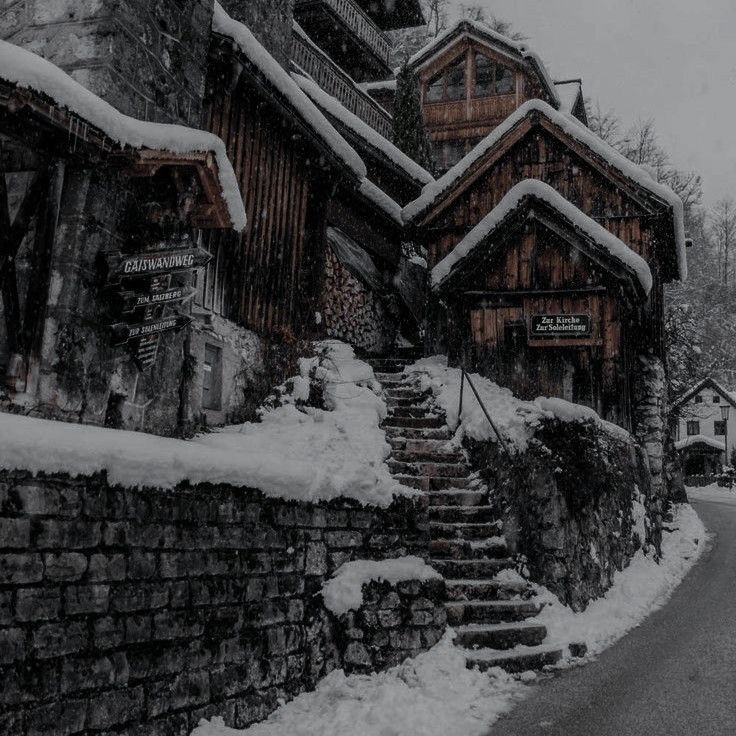
A Lucien Avernel story. Dire's Reach, the Frostreach. Year 0 of Pax Stella.
"It has four heads," Galena says, "and it can be a cat."
She is sitting on the top step of the Shield Stair with a dispatch across her knee and half a pear in her hand, and she has been waiting for me. That is new. People at Seinholden don't wait for me. They make room, as you would for a man carrying a pot off the fire.
I have come straight up from the Anvil. Galen kept me on the black sand until the lamps were lit, holding high guard while he talked about the drains under the fortress, which he admires, and which he says were cut by somebody who understood water better than anyone now living. He was still on the drains when my arms started to shake. He moved my left elbow a finger's width and went on talking. My forearms are humming from it yet.
"At the same time?" I say.
"No, not at the same—" She checks the page. "Separately. I think. The man who wrote the original was very frightened, and it did terrible things to his spelling."
She holds the dispatch up. When I take the last steps to reach it, she doesn't let go straight away.
"Dire's Reach," she says. "Top of the Frostreach, past where the Hollin road gives up and turns into a goat track. Slate, goats, two hundred people who have never wanted anything from anybody. Four dead since first snow. They sent to their margrave."
"And the margrave sent to us."
"The margrave died when the sky came down. The letter sat at Hollin for nineteen days because the clerk there didn't know whose it was, and then it went from desk to desk looking for someone to be upset at, and this morning it found me." She lets go. "I'd like to tell you that's unusual."
"Is it?"
"I'd like to tell you."
The dispatch is in a clerk's hand, copied fair from a letter I will never see.
DIRE'S REACH. ENTITY: YULASCA (LOCAL NAME). PALE. FOUR-HEADED. REPORTED TO TAKE THE SHAPE OF DOMESTIC BEASTS. FOUR DEAD. TIER II, PROVISIONAL.
Under it, in a different ink, smaller and squarer, someone has added: Contain where possible.
"Contain it in what?"
Galena takes a flat tin from her belt and sets it on the dispatch in my hand. "In that. Syndra sent it down this morning. Orinar binding. Her people made six over the summer and they would very much like to know whether they work."
"Has anyone used one?"
"In a room. On a ferret."
"A ferret."
"A very upset ferret. It held beautifully." She finishes the pear, looks around for somewhere to put the core, finds nowhere, and keeps it. "There are four pages of instructions and Syndra would like them done in order. Contain, suppress, eradicate. Father is sentimental about the order too. You'll find everyone is, this year."
I turn the tin over. The Orinar make things the way the priests made rules, carefully, for somebody else to carry.
"I know the Tenet," I say.
"I know you know it. I'm telling you he'll read your report." She tilts her head. "You're nervous."
"I've been on the sand four hours."
"You're tired and you're nervous, and I can only help with one of them." Galena feels what the people near her feel. She described it to me once as standing next to someone else's fire, and I gather that standing next to mine is not restful. "You're coming off like a kettle, Avernel. The pigeons have noticed."
There are no pigeons. There is a gull on the parapet, studying me with one yellow eye, and when I look back at it, it leaves.
"Why this one?" I say.
"Because it's small, and it's a long way from anywhere, and nobody important will be watching. And because I have sixteen Sentinels and a stack of letters taller than Syndra." She says it pleasantly. That is how Galena delivers most of the things she means you to keep. "He chose it himself. He wanted you somewhere quiet for your first."
"Four dead isn't quiet."
"No," she says, and lets it stand.
She stands and brushes pear off the blue scale of her armor, and reaches over and sets the star straight on my collar. It didn't need setting straight. Bronze, the lowest of the four tiers, and it pulses slowly, like something asleep.
"The Seal's key will put you within a mile. Probably. The Weave has been sulking since midsummer. If it puts you inside the mountain I'll make sure you're marked present." She starts down the stair. "Take socks. More than you think. The Frostreach eats them. And there's no road up there a horse will take, so you'll be walking, which I know will be a great sorrow to the stables."
The head groom at Seinholden has asked, through two intermediaries and with tremendous courtesy, that I not come into the stables again.
"I have socks," I say.
"You have three pairs," she says, without turning round. "I've seen your kit."
#
Aetherfang is across the foot of my bed, where I left it at dawn. Twelve days I have had it. It came to me at the oath, out of a long box of oiled pine with a Glumrindor mark burned in the lid, and the quartermaster who handed it over had the runes read for me and then admitted, almost apologetically, that the dwarves who cut them would not say what they were for.
I still carry it like a thing I'll have to give back.
That same morning the Codex Conduct took my name. I watched it happen. The page was blank and then it wasn't, my name in a script no pen had made, and under it, without being asked, three lines about a field outside Corveth. I didn't need to read them. I was there.
I pack five pairs of socks.
#
The Seal sets me down eleven feet above the Frostreach, which by the standards of the month is a kind of accuracy.
I land in a drift up to the waist. When the Weave carries you badly it does something to the inside of you, a sense that everything you own has been taken out and put back half an inch to the left, and I am sick in the snow while a goat watches from a ledge above me.
Goats scream. Nobody warns you. This one puts its slot-eyed face over the edge and screams at me as though I have personally wronged it, and it is still going when I find the road.
Dire's Reach sits in a notch of the mountain with its back to the wind: thirty-odd houses of grey stone, slate roofs weighted with rocks, smoke going sideways. The road comes in past a toll-house and a red-and-white bar. High above the village there is a stretch of slope where the snow will not lie. It's pale and bare and dry, as if somebody has put a thumb to the mountain and rubbed it out.
Below me the first dog starts barking. Then a second. By the time I reach the bar every dog in the Reach has passed the news down the valley, and a woman has come out of the toll-house to see what they're on about. Sixty or near it, three shawls and a man's coat, a face the wind has been working on for a long while.
"Crossing's two copper," she says.
"I'm not crossing. I'm stopping."
"Stopping's three, then."
I unroll the Concordant Seal far enough for her to see the sigils crawling in it. She watches them with no expression at all.
"Woman at the Hollin fair could make letters walk," she says. "Did your fortune for a copper. Lies, all of it, mind. Lovely lies."
"I'm a Virelan Sentinel. Under Article—"
I have read the Accord twice, the second time with Galen at my elbow, and I can tell you what every part of it is for. Standing at a toll-bar with the wind in my coat, I find I can't give you a single one of its numbers.
"Under the Accord," I say.
"Is it." She looks at the star. "Sent for the margrave, we did."
"The margrave is dead."
"Since?"
"Since the sky."
She takes it as people up here must take weather. "Well," she says. "He owed me for a cask."
She holds out her hand. The purse they gave me at Seinholden holds eleven silver and a printed chit promising that the Concordance will reimburse any reasonable expense, which I can't imagine anyone in the Frostreach trying. I find three copper and she lifts the bar.
Her name is Corra Bekk, and she keeps the toll, and the toll-house has the only table in Dire's Reach big enough to hold a meeting at, which is how a woman who takes coppers off mule-drivers comes to be the nearest thing the Reach has to a government. "Council's six," she tells me, going in. "Five of them's cousins. Sixth is me."
Inside is one long low room, a fire, a ledger on the table thick as a doorstep, and on the hearthstone an old grey-muzzled dog who lifts her head when I duck under the lintel.
I wait for it. The rumble, the lip lifting off the teeth. I have been waiting for it from animals all my life. The priests kept a cat for the mice, and it lived under the altar the whole of my childhood and never once came out while I was in the chapel.
The dog gets up, stiff in the hips, and comes down the room to me, and leans.
She puts the whole of her weight against my shin, as dogs do with people they've made up their minds about, and stays there.
"Well, there's a thing," Corra says. "She don't take to folk."
I put my hand on the dog's head because it seems expected of me. The skull is flat and hard under the fur. She is heavier than she looks.
"Tansy," Corra says. "Fourteen years she's had me. Bit the margrave's reeve, the once."
"Good."
That gets a noise out of her that might, somewhere warmer, have grown up into a laugh. She sits at the ledger. I stay where I am, because the dog is still leaning on me and I find I don't want to be the one who moves.
"Gone five days, she was," Corra says. "I'd said my piece over her. Old dogs go up the mountain when it's time, they don't want you watching. Come home yesterday thin as a rake." She throws a crust to the hearth. Tansy doesn't look at it. "Off her food since. Still. Come home."
She opens the ledger. It goes back further than she does, columns of mules and carts and salt and slate in a dozen hands, and in the latest pages, in her hand, the tolls run down the left side. On the right, behind a ruled line, are five names.
"One book," she says, seeing me look. "Start keeping two, you lose one."
She reads them out. Hew Brannock, quarryman. Agna Selby. Tam Orrin. Old Jory Kell. Liss Harl, nine years.
"My dispatch says four."
"Four, it was, when Owen wrote. Took it down to Hollin himself, the day after Jory."
I do the sum and keep it. Owen Tarle's letter was lying in a drawer at Hollin while Liss Harl was still alive.
"Found up by the white, every one," Corra says. "Up by the Bleach. All that's been found."
"Taken from their beds?"
"Went out. Up and out after dark, door left wide." She closes the book. "After what, nobody can tell you. We bar the doors now. Keep the beasts in. Fat lot of good."
"I'll want to see them."
"Winter-house." She jerks her chin at the mountain. "Ground's iron till the thaw. You'll want the loft as well, I suppose. Loft's two copper the night. Copper for lamp oil, if you're one for reading."
"I'm one for reading."
"You've the look." I can't tell if that's an insult. "You talk like nowhere, you know that? There's no place in your mouth at all."
The priests spent my first seven years sanding the county out of my voice. I don't tell her so. I give her the copper.
#
The winter-house is dug into the north face behind the village, a stone room under a turf roof, colder inside than out. They have laid the dead on planks along the walls. Somebody has put salt on their eyelids, which is the old way, what the priests did for paupers when nobody would pay for coins. Salt keeps the eyes shut while the soul finds the door. I carried the salt dish for that before I could read.
The small one is by the door under a blanket sewn with red stars. I don't lift that one.
Hew Brannock is the biggest and the easiest. A quarryman with a quarryman's forearms, frozen in the shape of a man who fought. I learned wounds in the army the way other men learned dice.
He was bitten four times, and the bites are four different shapes. High on the thigh, a long jaw, the canines a hand apart: a big dog's grip. Under the ribs, a crescent of needle-holes, small and close, a cat's. At the shoulder, a single deep wedge, driven in and twisted. A beak, or something that wanted to be one. And at the throat, the one that killed him, a neat round bite with small even teeth all the way round, made by a mouth that had never decided what it belonged to.
Agna Selby next, a narrow woman with chilblained hands. The same four. I spread my hand over them, thumb to the thigh, little finger to the throat, and they sit under my fingers at the distances they sat on Hew.
A pack doesn't bite in formation. Four mouths on one animal, all four arriving at once.
"That's my sister."
A boy in the doorway, eleven or twelve, with a black dog pressed against his legs. The dog's hackles are up from neck to rump and he's making a noise like a cartwheel on gravel. The boy is looking at the blanket with the red stars.
"I know," I say. "I won't."
He watches me to see if I'm lying. Then he watches me a while longer for other reasons.
"Is that gold?" The star.
"Bronze."
"Oh."
His name is Wynn Harl. The dog is Crow. Crow would like to open my throat and has decided, for Wynn's sake, to put it off. When I leave the winter-house they both come with me, Wynn at my elbow, Crow a careful four yards back, rumbling every time I turn my head.
"He don't like you," Wynn says.
"Nobody's dog does."
"Why?"
"They know something."
He considers this. "Your eyes do a thing. When you come out of the dark."
"They do."
"Are you a demon?"
"Half."
"Which half?"
"The priests used to argue about it."
He asks about the sword next, because he is twelve. I tell him its name. Who named it? Dwarves. What does the writing on the blades say? That much I can tell him, since I had it read. The Void has eyes.
"What's it mean?"
"I don't know. They wouldn't say."
"Then why'd they write it?"
I have no answer to that, and he seems to like me better for not having one.
He's the one who tells me where the word came from. Owen Tarle, the quarry-master, saw the thing the night it took Hew, across the gully by lantern-light, four heads on it and pale as grubs. But the name was Gammer Ebba's. Owen went to her because she's the oldest thing in the Reach, and she told him what it was called, and he spelled it the way she said it. Now it sits in a Concordance dispatch in a clerk's fair hand, which Wynn thinks is the funniest thing he's heard all winter.
Gammer Ebba's house is so black with smoke inside that my eyes have to change twice before I find her. She is no bigger than a child and deaf as the mountain, and she shouts.
"YULASCA," she says, before I've asked. Wynn has told her what I'm for. "Comes in at the door as your own beast. My gran told it me and her gran her."
"What does it want?"
"WHAT?"
"WHAT DOES IT WANT."
"To come in." She waits for that to get through to me. "You don't open to your own beast after dark. That's it. That's the whole story. Folk always want more story than there is."
"What does it look like?"
"Like your own beast. Are you simple?"
"When it isn't."
She takes so long that Wynn starts to fidget. Then she pushes back her sleeve and shows me the inside of her elbow, bluish and thin, skin the sun has never touched.
"Pale," she says. "Like under a plaster, when you take it off."
#
Tansy sleeps across my feet.
She climbs the loft stair behind me, one step at a time with a rest between, and Corra calls up that she'll want carrying down in the morning and that it'll be my back and not hers. The dog turns twice at the foot of the pallet and drops across my shins like a sack of wet sand, and sighs, and doesn't move again.
I oil Aetherfang by the lamp, because I was told to do it every night and I am new enough to do as I'm told. The fey-wood drinks the oil. The lux metal takes the lamplight and seems to keep hold of it a little longer than metal should. I go over both edges base to tip, and the runes, and wipe it down, and lay it on the boards where my hand will find it.
Then I take the Accord from my kit and read Article One again, slowly, so that next time somebody asks I'll have a number to give them.
I lie in the dark after with an old dog's weight on my legs. I don't sleep much. I don't move my feet.
#
Mared Harl tells it in her kitchen the next morning with both hands round a cup she isn't drinking from.
"I heard him at the door. Whining, scratching, how he does when he's got out and wants in. I'd the baby on me and couldn't get up, so I said, Liss, let that dog in before he wakes the house." She turns the cup a quarter-turn on the table. "Last thing I said to her. Let that dog in."
"And in the morning?"
"Crow on the step. Blood all over him, ear half off." She looks at the black dog under the table and the ragged ear. "We thought he'd gone after her. We thought he'd fought it."
Comes in at the door as your own beast. The dog at the door in the night. The dog on the step at dawn, back again, with blood on him that might be his own and might not.
"I need to look at him," I say.
Wynn is on the bench by the wall. He has listened to all of it with his face shut. "Look at him how?"
I tell them what I've been told about the blade, which is everything I know about it. If a thing is wearing a shape that isn't its own, the edge opens the shape, and everyone in the room sees what's under it. That is what the quartermaster said. I have not yet watched it happen. A small cut, I tell them. The shoulder. I'll stitch it after.
"And if he's just Crow?" Wynn says.
"Then he's Crow with a cut on his shoulder, and I've stitched him."
Mared looks at her son, then at the dog, then at me, and I watch her decide that a cut dog is a cheap price for knowing. I'd decide the same. I already have.
"Hold him," she tells Wynn.
He does. I give him credit for that later, when I'm handing out credit. He gets down on the floor and puts both arms round Crow's neck and holds the dog's head against his chest and talks into the ragged ear. Crow is shaking. Crow knows exactly what I am and is being held still in front of it by the one person he trusts, and he lets it happen.
I slip the leather off one blade and set the edge to the meat of his shoulder and draw it an inch.
Blood, and a yelp, and nothing else. The fur parts and the skin parts and under the skin is dog.
Crow twists in Wynn's arms as anything does when it's hurt, and his teeth close on the first thing they find, which is Wynn's hand.
Wynn screams. Mared is across the kitchen. The baby goes off in the cradle. Crow lets go at once, appalled, and tries to lick the hand he's bitten, and Wynn is crying and clutching it to his chest, and he says to me, very clearly, "It wasn't Crow."
"Wynn—"
"Not Crow at the door. On my feet, Crow was, all night, I had him by here on my feet, he never went out till Liss opened it." He's gulping air. "Smut it was. Mewling. Our cat. Always she went after Smut, Liss did, and Crow went after Liss. You never asked me. Never asked me nothing."
Mared has the hand in a cloth and won't look at me. "Our cat," she says. "Went off ten days back. Come home after three, thin. Liss was that glad." She presses the cloth tighter. "Never come home after. We thought it took him too."
I sit on the floor of the Harls' kitchen with a bleeding dog across my lap and get out my kit: curved needle, gut, the little tin of salve. Crow doesn't fight me. He's too shocked to. I put eleven stitches in him while his boy cries at the table and his mother binds the boy's hand with her back to me, and nobody in that kitchen says anything else.
I don't know if the Codex Conduct writes down a dog.
#
Owen Tarle is waiting for me in the lane with two of the cousins and a crossbow he isn't pointing at anything yet. He is a long dry man with quarry dust worked into every crease of him, so that he looks drawn in chalk.
"Concordance," he says. That seems to be what they've settled on calling me. "You've cut Harl's dog."
"I have."
"And?"
"He's a dog."
"Could have told you that for nothing." He shifts the crossbow to his other arm. "Here's how it goes. Tonight we put down every beast in the Reach. Dogs, cats, the Orrin goats, anything with fur on it that sleeps under a roof. Burn them on the green. After that, anything comes scratching at a door, we'll know what it is."
I stand in the lane and turn it over, and what I don't like is that it might work.
"It won't let you," I say. "Put a knife to the right one and it won't be a dog any more, and it'll be in the house with you when it stops being one."
"Then we lose some."
"You'll lose more than some."
"We've lost five." He looks at my collar, and then at my face, and doesn't care for either. "You going to stop us?"
"I can't. Your beasts, your law. Article One."
It is the first number I've managed to give anybody in Dire's Reach, and it's the one that says I'm no use to them.
"Then what are you for?" Owen says.
I don't have an Article for that.
"Give me tonight."
"And if you're wrong again?"
"Then tomorrow you burn them, and I'll help you carry."
He looks at me for a long breath, and the cousins look at him, and then he turns the crossbow over and walks off down the lane with it on his shoulder.
"Tomorrow, then," he says, without looking back.
#
A beast goes missing and comes home thin. Somebody opens the door to it after dark. Then it doesn't come home again.
I spend the afternoon at doors to get the rest, and nobody likes the question. Has your beast been gone, and come back? Most doors close on me. One woman spits. A man with a mattock tells me that if I want to cut his dog I'll have to cut him first, and I believe him. But the Reach is small, and grief will make people talk even to a stranger who has just knifed a child's dog, and by the time the light goes I have them. Hew Brannock's dog was gone four days and came home, and when Hew went out into the dark the dog went with him and neither came back. Agna Selby had a cat. Tam Orrin's girl kept a kid goat in the kitchen. Old Jory had a jackdaw he'd taught to say his name.
Coming back up the lane in the first of the evening snow, I get there. Corra said it to me before I'd had my coat off. Come home yesterday thin as a rake.
She was heavier than an old dog has any business being. She'd been lying by the fire, and she was cold against my leg, and I put that down to age. She is off her food. And she came the length of the room to lean on a man every other dog in the Reach wants dead, and I stood there and let her.
#
Corra is at the ledger when I come in. Tansy is on the hearthstone, and when she sees me her tail knocks once on the stone and she hauls herself up and comes to me.
This time I listen.
It takes a moment to find it under the fire and the wind and the scratch of Corra's pen. A heart, slow, slower than any dog's. Then another, not quite in time with the first. Then two more. Four hearts in one body, each keeping its own count, like men who were never taught to march.
She leans on my shin.
"I need to borrow your dog," I say.
Corra doesn't look up. "She's fourteen."
"She's been up to the Bleach and come back. She'll know the ground better than I do."
Corra blots the line she's written and looks at Tansy, and at the dog leaning on me, and sets the blotter down square to the edge of the book.
"Take her, then," she says. "She'll go with you. First night home she sat by that door till light, looking at me. Never used to. Used to sleep on my feet."
"Bar the door behind us."
"I always bar it."
#
At the edge of the village, the star on my collar is the brightest thing on the mountain. It pulses bronze under my chin, slow and steady, and anything up that slope with eyes will see me coming a mile off. I unbuckle the collar, take a sock out of my pack, pull it over the star, and buckle the collar again. The pulse comes through the wool as a dull warm beat against my throat.
That is the first change I make to the uniform of the Virelan Sentinels. Galena will want to hear about it.
Tansy walks at my heel. Behind us the village dogs are barking. Ahead there is only the wind and my boots in the snow and the dry tick of her claws, and under that, if I listen, the four hearts. I listen all the way up.
I don't carry a lantern. I see well enough in the dark, sixty feet or so, flat and grey like a drawing in pencil, and a lantern would only tell it where my hands are.
The path climbs through snow for a mile and then the snow stops, along a line as clean as a hem. Past it the ground is bare and dry and the colour of old bone, and when I step onto it the warmth comes up through my boots. It smells of hot slate and milk on the turn. Nothing grows. Ahead is what used to be a shepherd's hut, the same white as the ground, roof fallen in, the door a black square.
Tansy goes ahead now. A yard. Two. She stops at the hut and sits and looks back.
I don't chase. Every fight is a tide. You don't run at the water. I walk to where I want to be, which is the hut door, with stone at my back and the opening beside me, so that whatever comes has to come from the front and can only come so wide.
"Well," I say. "Here we are."
I don't know why I talk to her. She's shaped like a dog, so I talk to her as I would to a dog.
She looks up at me out of her old clouded eyes and her tail sweeps once across the white ground. Then she stands up in a way dogs don't.
It starts at the spine. The fur parts from skull to tail along a seam no dog has, and out of the gap comes the thing itself, the way a hand comes out of a glove, and keeps on coming. The dog-shape slides down off it and never reaches the ground. It's taken back in. What rises out of Tansy is the size of a pony and hairless as a newborn, and its skin is Gammer Ebba's elbow, under-a-plaster pale, the veins running blue beneath.
It has four necks. On the end of each is a head.
The first is Tansy's. Grey muzzle, clouded eyes, one ear that folds. The second is a cat's face, flat and black and green-eyed: Smut, I suppose, though we were never introduced. The third ends in a jackdaw's beak, grey at the nape, with an eye the colour of dishwater. The fourth is smooth. No eyes, no ears, nothing at all until it opens, and then it's only a mouth, round, ringed with small even teeth.
The cat's head comes for my face.
Haft up. The jaw hits the fey-wood a hand from my knuckles and the shock goes into both wrists, up the bones of my forearms, and stops behind my back teeth. My heels skid a foot on the dry ground. It's a cat's head. It hits like a ram.
The haft soaks up the blow and holds it, humming in my palms. I turn my hips and give it back. The lower blade comes round carrying the cat's weight and mine together and opens the face from ear to jaw.
No blood. The wound tears instead. The tear runs back along the neck and the cat comes off it in strips, like wet paper, and under the strips is bare skin and no face at all. The head keeps biting with what's left.
The shine has gone dull along that edge.
Beak.
It takes me in the left shoulder. Drives in. Twists. Leather, then meat, then the point grates on bone and stays there. I tear free and leave some of the shoulder on it.
Tansy's head goes low for my thigh. I step back into the doorway. Stone at my back, the frame either side, room for two necks at a time. That was the plan.
The body doesn't come through. It doesn't need to. It plants on four short legs with all its weight slung low, wide as a grindstone, and the necks do the work. I cut at Tansy's. The edge bites, slides on something dense under the hide, and skids off. The jar numbs two fingers on my right hand.
Breath in my face, hot. Milk on the turn, and under the milk, meat kept too long in the dark.
The smooth head comes up under the others. I never see it. It fastens on my right hip.
The teeth go round and close all at once, and meet.
The door in my skull comes open a crack.
It's warm. That's the worst of it, every time. Heat climbs out of the middle of me and runs down my arms into my hands, and the veins on the backs of them go black, and the night gets a shade brighter, and the thing in front of me gets slower and simpler, and something in me that is very old and very glad says there.
The beak again. I take it off at the base of the skull. The blade doesn't skid this time. It goes through bone with a screech like a spade on slate and out the far side.
The smooth head is still in my hip. I close my hand over it and squeeze. The jaw creaks. The teeth come out of me one ring at a time.
Then in under the necks, shoulder first, as Galen drilled it into me all summer. It's like shouldering a cart that's been loaded wrong, everything heavy and low and in the wrong place. It doesn't go over. I drop lower, get my hip into the joint where the necks meet the body, and heave. It goes over. I go with it.
Down on the white ground. Haft across three necks. Knee on the haft.
It bucks. The fey-wood bows against my kneecap and creaks. Its legs rake the air, the ground, my ribs. Every buck comes up through the wood into the bone of my knee.
I hold it.
Tansy's head is under my knee, looking up at me.
The heat says finish it. The heat has a great deal to say, all of it reasonable. The last time I knelt on something with the door this far open it was outside Corveth, and they were boys, and they had their hands up.
Contain where possible.
Shutting the door is like shutting a door in a gale with your shoulder. It goes an inch at a time. The heat sulks back down to wherever it lives, and the night goes flat and ordinary, and I am a man kneeling on a monster with his hip bleeding into his boot, getting a tin out of his coat with one hand.
The instructions are four pages long. I read them four times at Seinholden and once more in the loft last night, and I don't need them, and I still have to say the word on the second page twice before it takes. Loop under the heads. Cross. Clasp over the crossing. The cord comes alive in my hands like a snake waking up and draws itself tight round the necks, and goes the gold of a ward, and starts to tick, softly, like a kettle cooling.
The thing under my knee goes still.
I take my weight off it slowly. It doesn't move. It lies on the warm white ground in its gold loop and watches me out of the one face it still has.
I sit down a yard off with Aetherfang across my thighs and count to thirty. Then I count to thirty again, because the first time I wasn't listening. The blade has gone the dull grey of a pewter spoon, both edges, and I have no idea what I've done to it.
Contained.
I'd like Galena to see it. I'd like Galen to read it. Then it comes to me, sitting there, that the dispatch said contain and not one line of it said in what, or for how long, or until who comes. The nearest Orinar is somewhere south of Seinholden. The nearest cellar is the winter-house, with five people in it. I have a monster in a piece of string on top of a mountain and the rest of the night to think about that.
After the first hour I'm stiff and cold despite the ground. After a while longer I get up to look in the hut, because it's there, and because I can't stop myself wanting to know what's in it.
Bones. The small bones of animals and some that aren't small. A bell. A red ribbon a girl tied round a kid goat's neck. A dog's collar of plaited leather, worn shiny on the inside, with a brass toll-chit hung from it on a twist of wire. I'm crouched turning the chit over when I notice I can't hear the ticking.
When I turn round the cord is lying on the white ground in a loop, around nothing, and the gold is going out of it like a coal going out.
There are tracks going down the slope. A dog's.
#
You don't run at the water.
I run.
Downhill in the dark. Through the snow line, through the drifts, the hole in my hip opening every stride. Before I reach the first house the dogs have started, yard after yard. Round the last corner above the toll-road. The toll-house door is standing open and the lamplight is lying out across the snow in a long yellow tongue.
Corra is on the floor with her back against the leg of the ledger table. The thing is on her, half out of Tansy, the dog-skin hanging off it like a coat off one shoulder, and the old dog's jaw has her right hand. She has the poker in her left. She is beating the smooth head with it, steadily, saying something through her teeth over and over that I don't catch.
The door in my skull comes open again, wider than it went up on the Bleach, and this time I don't put my shoulder to it.
Two necks. Both hands. I haul.
It doesn't come. Its claws are through the floorboards, and the boards come up before it does. I set my feet and haul again, and it tears loose all at once, and I swing the whole weight of it round and put it through the ledger table.
The table goes in half. The fire goes over. Sparks across the floor.
It's up again before I have my balance back.
Tansy's jaw for my knee. The faceless neck for my eyes. I cut at the faceless one. The blade is grey as a spoon, and when it bites, nothing tears. Skin. Only skin. Whatever the edge had in it, it spent on the mountain. The steel grinds into the hide, drags, and binds halfway through.
I wrench. The body twists the other way. The haft nearly goes out of my hands.
Teeth in my forearm. Teeth in my side. They arrive as news, not pain.
The black is past my wrists. My face is hot from the inside. There's a noise in the room, low and steady, and it's coming out of me.
Some small cold part of me stays at the back, keeping count. It keeps my feet between Corra and the thing. It's the only order I take from it.
I let go of the blade. It stays in the neck, hanging.
The smooth head. Both hands. It's dense as a cobble and hot, and the ring of teeth turns in its mouth toward my fingers. I drive it into the hearthstone. The stone cracks. The jolt comes back up my arms into both shoulders. Again. Something in the head gives with a wet crack. Again.
The body throws me. Off the hearth, into the wall. Plaster comes down on my head. The air goes out of me all at once.
Back up. Hand on the haft. I lean. The blade saws, screeching on bone, through the faceless neck and on into the shoulder, and the creature goes down on its side, and I go down on top of it.
Haft across the last neck. Knee on the haft.
Tansy's grey face looks up at me, and it whines exactly as a dog whines on the wrong side of a door.
Corra hears it. I see her hear it.
I put the blade through where the neck meets the body. Pull it out. Put it through again. Again. There's no reason. It's dead. The heat doesn't care whether it's dead.
"That's my floor," Corra says.
I stop.
She is sitting against the wall now with her ruined hand held to her chest in her shawl, and she is looking at me, and I can feel what my face is doing. The skin of it burns. My canines are pressing at my lip.
Lanterns in the doorway. Owen Tarle with the crossbow, and this time it's pointed at something, and the something is me. The cousins behind him. Behind them, Wynn Harl in his nightshirt with his bound hand, and Crow against his legs, barking so hard his front feet come off the ground.
Owen's finger is on the lath. I watch him decide which of the things on the floor is the monster.
"Put that down, Owen," Corra says. "You'll hit the ledger."
It is a long time before he does. When he does, he does it slowly, and doesn't take his eyes off me, and neither does anybody else in the doorway, and it's longer still before my eyes stop doing the thing.
#
Two fingers on her right hand can't be saved. Her writing fingers. I take them off at the second joint with the cleanest edge I have, which isn't Aetherfang, and stitch what's left, while the fire smokes in the corner where Owen's cousins have kicked it back together. She doesn't make a sound. She watches the needle the whole time as if she's checking my work.
When I'm finished I take the collar out of my coat and give it to her.
She turns the toll-chit over with her thumb. "Put that on her the winter she was a pup," she says. "Paid her crossing for her. It was a joke."
"I know."
"You don't know. You weren't here." She lays the collar on the open ledger and smooths it flat with her good hand. "When?"
"Before she came home."
I watch her do the sum. Two nights under her roof, eating nothing. One of them by the door, looking at her.
"She come back without you," Corra says. "Scratching. Ear torn. I thought you were dead up there and she'd come home to tell me." She looks at the door. "You said bar it. I barred it. Course I opened it."
I don't say anything.
The lamp survived. I lay Aetherfang on the wreck of the table while I wrap my own forearm, and somewhere in the hour that takes, I glance across and see the grey going out of the metal under the lamplight. Not all of it. Some. As if the blade were drinking. I don't know what that means. I take the lamp up to the loft for what's left of the night and leave it burning beside the blade, because the blade looked better for it, and in the morning Corra charges me a copper for the oil.
She can't hold the pen. She pushes it across the ledger at me with her left hand and tells me what to write.
Concordance. Stopping, two nights. The coppers. Lamp oil. Then, after a while, floor, and a sum she makes up on the spot, and I write that too.
"And her," she says.
She means the right side of the ruled line. I write Tansy under Liss Harl, in my clean careful hand from nowhere, and Corra looks at it and nods once, as if I've got the spelling right.
"Somebody will come for the Bleach," I tell her. "An Orinar. It's their kind of work. It needs closing."
"When?"
"I don't know. There are fewer than twenty of them."
"In the Frostreach?"
"In the world."
She takes that as she takes weather. Then she flexes what's left of her right hand inside the bandage and winces, the first time I've seen her do it.
"Margrave had forty men," she says. "Never sent one of them up that road in eleven years." She shuts the ledger. "Go on, then."
#
I write the report at her table before I go, in the Concordance form, which has a line for everything except most of what happened.
Entity: Yulasca. Destroyed.
Dead before arrival: five. The dispatch gave four. The fifth died while the letter was at Hollin.
Containment: attempted, with Orinar binding as issued. Held most of two hours. Failed while I had my back to it. The Weave may be the cause.
Injured after escape: Corra Bekk, toll-keeper. Two fingers, right hand.
Injured by the reporting Sentinel: one dog, Crow, of the Harl household. Eleven stitches. One boy's hand, by the dog, in consequence.
The ground called the Bleach requires an Orinar.
I read it over once. Galen will read it, and then he'll ask me something, and I can't guess what. I leave in the line about my back. Of everything on the page, it's the part that's mine.
#
Wynn is on the Harls' step with his hand bound up and Crow at his feet. He watches me come down the lane and doesn't get up or say anything, and I don't make him.
Every dog in Dire's Reach sees me off the mountain. They start at the top of the village and hand me down the lanes from yard to yard, and Crow, with eleven of my stitches in his shoulder, comes off the step and follows me past the last house and a good way down the road, barking the whole time, and turns back only when he's satisfied I mean it.
Stay for the next story.
Get a short email when I share new stories, novel excerpts, world notes, or blog posts.
Choose your alerts after signing in.
Unsubscribe anytime.
Comments
Share your thoughts. Please keep it respectful and flag spoilers.
Sign in to your reader account to comment or reply. Everyone can read the discussion.
You can remove comments as the author.
Loading comments…