Two Clocks
This is my attempt at writing crime fiction. Set in Kyoto, Japan, in 2026, it follows Dante Mori, a private investigator from Vancouver. Hope you enjoy! It is a bit of a change from my usual fantasy genre, simply because I was inspired by Kyoto.
© 2026 Michael Gabriel Viloria. All rights reserved. Copyright & permissions
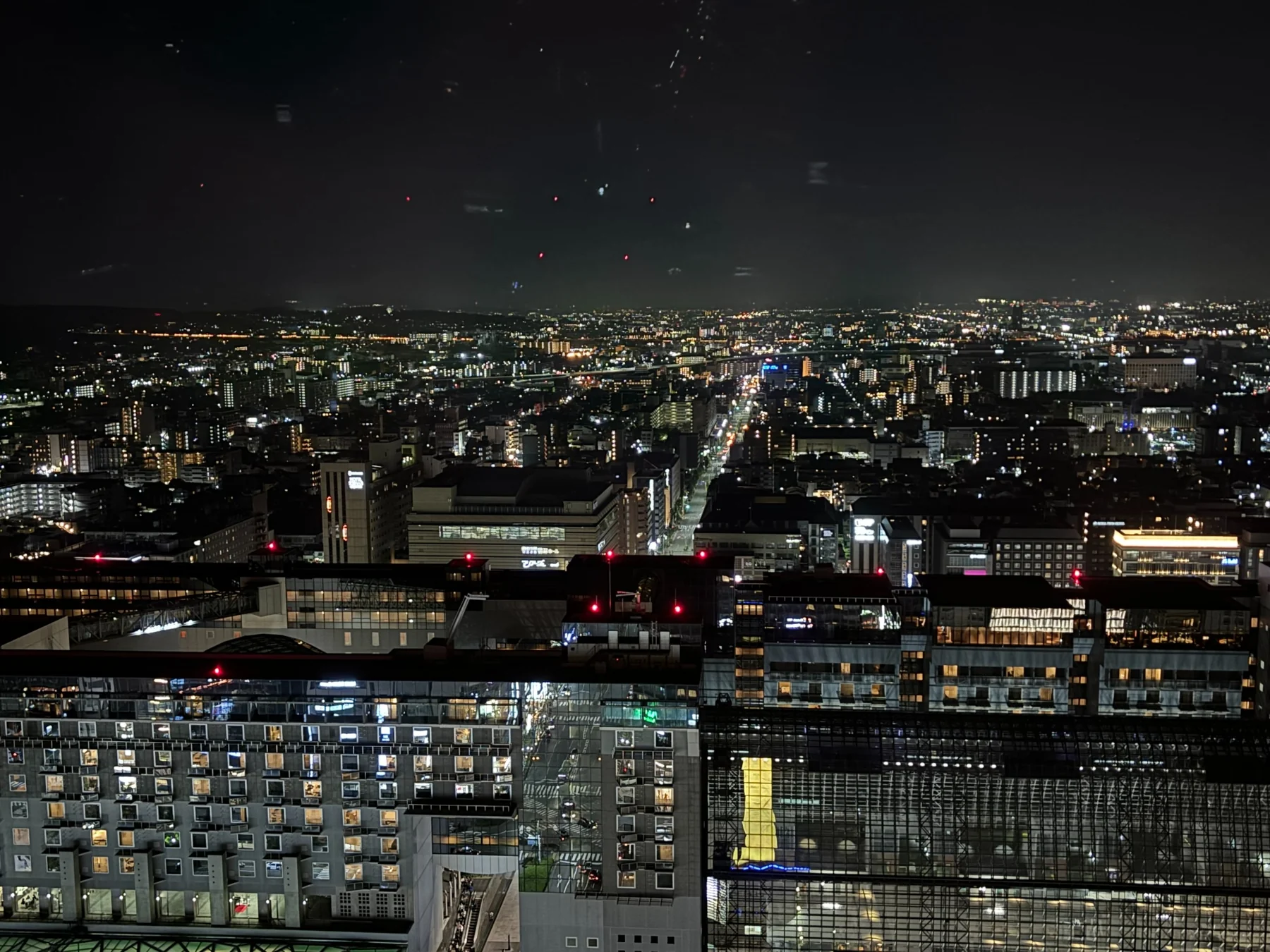
The dead man had one shoe, and it was the wrong one.
Not wrong in any way the Kyoto Prefectural Police had written down. They’d written: one black leather shoe, men’s, left foot, found in the genkan. They’d photographed it. Measured it. Twenty-six and a half centimetres. They’d noted that the right shoe could not be located and concluded, reasonably, that a man who lived alone and worked eighty hours a week was capable of losing a shoe.
“Nobody loses one shoe,” I said. “Indoors.”
“People lose things,” said Detective Inspector Morikawa.
“Umbrellas. Keys. Their dignity after the third beer. Not a shoe at the door of their own house. You step out of them here and line them up. You do it ten thousand times until your body does it without you.” I crouched. Polished toe. Heel worn harder on the outside edge. Laces still tied. He’d stepped out of these without untying them, the way everyone does when they’re tired. “He did that on Saturday night. Someone took the other one.”
“Why would someone steal one shoe?”
“That,” I said, “is a much better question than the one you called me about.”
She’d called at 7:10 that morning. Two lines: There is a body. I would like you to tell me I’m wrong. After the Harada case she’d decided I was annoying and useful in roughly equal amounts. Today, apparently, the second was ahead.
A narrow house in Higashi-Kujō, a few streets south of the tracks. Genkan, kitchen, workroom. Rain on the window. Kettle cold.
“Show me him.”
Nakagawa Ren, thirty-eight. Firmware engineer at Kaname Devices, the smartwatch company whose glass tower you can see from the Kyoto Station Skyway if you look past the hotels. He lay on his back on the workroom floor beside his desk and an overturned chair. Grey cardigan. Socks. Right hand open. Left hand clawed up at his collarbone, fingers hooked into the cardigan, as though he’d been trying to pull something off his chest.
“Cardiac arrest,” Morikawa said. “He had long QT syndrome. A heart rhythm condition. His sister says he’d had episodes before. Preliminary is natural causes.”
“Neighbours?”
“The woman next door heard nothing. No voices. Some beeping through the wall, she said, around half past seven. Electronic. She thought it was his rice cooker.” Morikawa shrugged. “He didn’t own a rice cooker. He owned a great deal of electronics.”
“And you don’t believe it was natural.”
“I believe it. I don’t like it.” She nodded at his wrist. “Look.”
A smartwatch. Matte black, square face, thicker than a retail model. The screen had dimmed to its last-event display.
⚠ HIGH HEART RATE
143 BPM · 20:34
22 NOV 2027
Below it, a flat line where the heart-rate graph should have continued.
“He died at 8:34,” Morikawa said. “His heart went to one hundred forty-three, and then it stopped.”
“His heart went to a hundred and forty-three and then it stopped,” I agreed. “The watch is right about that. It’s wrong about everything else.”
“It’s November twenty-second, twenty twenty-six,” I said. “This says twenty twenty-seven.”
“A glitch.”
“Watches sync to phones. Phones sync to network time. Nobody’s watch drifts a year.” I turned his wrist with two fingers under the strap. Stamped on the steel back, tiny: KANAME · DEV · NOT FOR RESALE. “Dev unit. Engineers test pre-release hardware on themselves. And dev units let you set the clock by hand, because when you’re debugging you need to fake midnight, fake a time zone, fake a leap year.”
Developer options were three taps deep. Engineers never lock their own test hardware. The device log was right there, plain text, scrolling.
19:12:40 OTA cfg applied — src: fleet-mgr / acct: qa-fleet-03
19:12:41 time_source: NETWORK → MANUAL
19:12:41 rtc_set: 2027-11-22T20:12:41+09:00
“Someone pushed a configuration to this watch over the air,” I said. “At 7:12 last night, by the watch’s old clock, before the change. They switched it off network time and typed in a new one. Twenty-twelve became twenty-twelve plus an hour. And they typed the year by hand and hit the wrong digit.”
“He could have done it himself.”
“From a shared QA account, at 7:12 on a Saturday night, while his kettle was boiling?” I tapped the log. “This came through the company’s fleet manager. That needs VPN access. Kaname will have a record of which device was on the VPN at 7:12.” I sat back on my heels. “If you change the year by accident, what were you changing on purpose?”
Morikawa was quiet for exactly as long as it took her to get there. She was quick. She didn’t like being quick in front of me.
“The hour,” she said.
“Tell me about the man you suspect,” I said.
“I didn’t say I suspect anyone.”
“You called a private investigator at seven in the morning about a natural death.”
She exhaled through her nose. “Sugimoto Daisuke. Kaname’s Director of Product Safety. Nakagawa’s superior, two levels up. They argued on Friday, loudly, in a glass meeting room. Half the floor saw it. Nobody heard what about.” She folded her arms. “He was in Kyoto last night. He has a perfect alibi.”
“The train.”
She looked at me sharply.
“You said perfect,” I said. “People only say perfect about alibis that involve machines.”
“His IC card passed through the Shinkansen gate on the Hachijō side at 19:47. The 19:50 Nozomi to Tokyo. Cameras show him boarding car seven. His phone logged onto the train’s Wi-Fi a minute after departure and stayed on it past Shizuoka. At 20:34 he was through Nagoya and doing two hundred and seventy kilometres an hour.” She shrugged. “Shinkansen windows don’t open, Mr. Mori. He couldn’t have been in this room.”
“Not at 20:34. How long from here to the Shinkansen gates?”
“Walking, fifteen minutes. Running, ten or eleven.” She paused. “A taxi from the corner, six or seven, if the lights are kind.”
“If you’d just done something terrible and were running for a taxi,” I said, “your heart rate might be a hundred and forty-three.”
I called Rajan from the genkan, because I had a structure that felt finished, and that’s the moment I trust myself least.
Mid-afternoon in Vancouver. He answered on the fourth ring with his mouth full.
“Bannock,” he said. “Don’t judge me. What’s wrong?”
“A watch says a man died at 8:34. Someone set it an hour fast, so it says 8:34 when it was 7:34, and the killer was on a train at 8:34.”
“And how do you know it was an hour?”
“The log says the clock was moved forward—”
“By the same machine you’ve just proven is lying.” Chewing. “You’ve caught one clock in a lie and now you’re trusting it about the size of the lie. You like the shape of the answer, Dante. That’s not the same as having it.”
I watched the rain in the lane.
“I need a second clock,” I said.
“Now you’re thinking. Send me something fried.”
The workroom desk was clean in the particular way that tells you someone else cleaned it. Monitor. Keyboard pushed back. Mug of tea, cold, with a skin on it. A notepad, A5, the paper printed with a faint grey haze that resolved, up close, into thousands of tiny dots. Two ragged fringes of paper were still caught in the binding, one torn neatly, one torn in a hurry.
And a pen. Fat, matte black, a little heavier than a pen should be. A crescent engraved on the clip: KANAME. A label in Nakagawa’s tiny handwriting: INK-2 / DEV.
“They make pens?” Morikawa said.
“Smart pens.” I lifted it with my coat sleeve. “There’s a camera in the tip. It photographs the paper a hundred times a second. The dots on that pad aren’t decoration; every patch of dots is unique, so the pen always knows exactly which page it’s on and where on the page the nib is. It stores the strokes until it syncs.” A tiny green LED glowed by the clip. “With its own clock. Set from his phone every time it syncs, and his phone runs on network time. Different product. Different firmware. Not on the dev-watch push list.”
“A second clock,” Morikawa said.
“And somebody tore off the pages,” I said. “But they left the pen that remembers them.”
I installed Kaname’s companion app in forty seconds. The pen paired without a PIN. The app reported: last sync 18:02:15 · clock offset 0.03s. Then it offered a list of pages.
Two, not one. Pad 4417 · p.37 · 19:31–19:32. And p.38 · 19:34.
“Count the sheets left on the pad,” I said.
She did, touching only the corners. “Thirty-five.”
“Two pages gone. He tore off one. Someone else tore off the other.”
I played page 37. The page bloomed white on my screen, and stroke by stroke Nakagawa Ren’s handwriting drew itself in front of us at the speed he’d written it. Morikawa leaned so close I could smell the rain on her coat. Neat. Unhurried.
12 · 11 ↑
B1
1122
Last stroke: 19:32:38. A pause in the log, then a short smear at the very edge of the dot pattern: the nib dragging as the sheet ripped away beneath it.
“He wrote it,” I said. “Then he tore it off. Something made him stop and hide it.”
I played page 38.
Almost nothing. A single downstroke, hard enough that the pen logged maximum pressure. A hook, the start of a character. Then one long, wild slash off the bottom of the page.
19:34:12.
On the floor behind us, the watch on Nakagawa’s wrist still said 20:34.
Same minute. One hour apart.
“That isn’t a note,” Morikawa said quietly. “That’s a man trying to write a name.”
“And someone who watched him do it,” I said, “and took the page.”
“Rajan was right,” I said. “That’s one clock telling us the other was moved an hour. It still doesn’t tell us how he died.”
“Heart condition,” said Morikawa. “Stress. A man came to his door; he was frightened.”
“People with long QT often have a defibrillator implanted. A small one, under the collarbone.” I knelt by the body and looked at his left hand, the fingers hooked into his cardigan. “If he had an episode, it should have shocked his heart back into rhythm. That’s its entire job.”
I lifted the edge of the cardigan with a pen from the desk. Under the left collarbone, a ridge in the skin, the size of a matchbox. A thin pale surgical scar beside it.
And over the ridge, a faint, round red mark. Five centimetres across. A pressure bruise that hadn’t had time to darken.
Morikawa crouched beside me. She didn’t speak.
“These devices have a safety feature,” I said. “Hospitals use it before surgery, so the defibrillator doesn’t fire by mistake when they’re using electrical equipment. A strong magnet held over the device stops it delivering shocks for as long as the magnet stays there. Take it away and it goes back to normal. Some can be programmed to ignore magnets. Most aren’t.” I looked at the wall that the next house shared. “And many of them beep when the magnet takes hold. So the doctors know it’s worked.”
Morikawa turned her head toward the wall too.
“The rice cooker,” she said.
“He was pinned against his own desk with that pressed to his chest. One hand trying to pull it off. The other reaching for the pen.” I looked at the overturned chair. “Sugimoto didn’t need to do anything to his heart. Long QT, a man holding him down, adrenaline: there was a good chance his heart would go into a bad rhythm on its own. It had happened before. Kaname runs an employee health programme for dev-unit testers, and Product Safety owns the enrolment data. Sugimoto could have known the device model, the settings and how often it had fired this year.” I let the cardigan fall back. “He didn’t make the arrhythmia. He just made sure nothing stopped it.”
“And if it didn’t happen?”
“Then a frightened engineer gets an apology and a visit from Legal on Monday. It wasn’t certain. It was likely.” I stood. “He’s spent his career deciding when likely is good enough.”
Morikawa was already dialling. Hospital. Cardiology. The device manufacturer’s technician. Interrogation, today, urgent.
The third clock.
“The numbers,” Morikawa said. “It’s a cipher.”
“It’s a location.” I was moving through it before she finished. “Twelve, eleven. Two numbers and an arrow. Not latitude. Too small. A grid. Kyoto is a grid. You don’t give a house number here; you give two streets and a direction. The arrow’s agaru: north of the intersection. B1 is a basement. 1122 is—”
“Yesterday’s date.”
“Or a locker. Four digits.” I stopped. “The twelfth east-west street and the eleventh north-south. Counting from where?”
That was where the speed ran out. I knew the streets. I’d walked half of them. I couldn’t number them, because nobody numbers them. Kyoto has names, and the names come in an order I’d never been given.
Morikawa was looking at the screen with an odd expression. Then, very quietly, almost under her breath, she began to sing.
A children’s song. Quick and singsong, syllables tumbling over each other, half-words. Maru, take, ebisu, ni, oshi, oike…
She was counting on her fingers.
“Ane, san, rokkaku, tako, nishiki, shi—” She stopped. “Twelve. Shijō.”
“The street names. In order.”
“Every child in Kyoto learns it. So they can find their way home.” A different tune, the other direction. “Tera, gokō, fuya, tomi, yanagi, sakai, takakura, aino, higashi, kuruma-ya—” She ran out of fingers, frowned, and started again on her thumb. “Karasuma. Eleven.”
“Shijō–Karasuma. North side.”
“The office buildings above the station,” she said. “Some of the older ones have parcel lockers in the basement arcades. Delivery boxes. You can rent one by the week.” She picked up her umbrella and paused. “Sugimoto is from Yokohama.”
“Then if he read the page,” I said, “it meant as much to him as it did to me.”
There were three buildings on the north side of the intersection with basement arcades. The second was a tired, tiled 1980s tower called the Kōgetsu Building, with a ramen counter, a dry cleaner and, past the stairs to the subway concourse, a bank of grey parcel lockers under fluorescent light, beside a vending machine selling hot corn soup.
Locker 1122 was third row from the top.
The warrant took nineteen minutes by phone. The building manager took four more to find the master key and apologize for the delay twice.
Inside: a padded envelope. A microSD card. A folded sheet in the same tiny engineer’s hand.
If you are reading this, I didn’t get to talk to anyone. Kaname Pulse suppresses arrhythmia alerts in ~3.2% of flagged events to reduce false-positive complaints. Approved by Product Safety, Q2. I have the logs. 14 users we know of had cardiac events inside suppressed windows. 4 died. — N.R.
Morikawa read it twice. Then she folded it along its old creases and held it the way you hold something a court will one day want back exactly as you found it.
“Four people,” she said.
My phone rang. A Tokyo number. On the way over I’d called JR Central’s lost-property office with a question that made the woman pause before saying she’d check.
I listened. Thanked her. Hung up.
“At 22:41 last night,” I said, “a cleaning crew at Tokyo Station found something in the waste bin between cars seven and eight of the 19:50 Nozomi from Kyoto. One men’s black leather shoe. Right foot. Twenty-six and a half centimetres.” I paused. “The laces were cut. The insole had been torn out.”
Morikawa closed her eyes. “He searched it.”
“On the train. Where he finally had time and a locked door.”
Her phone buzzed before she could answer. She listened for a long while, saying only hai, hai, and once, very quietly, something I didn’t catch. When she hung up her face had gone still.
“The device,” she said. “Magnet detected at 19:33:41. Dangerous rhythm detected at 19:34:09. Shock withheld: magnet present. Magnet removed at 19:38:20.” She looked at me. “By then it was too late.”
Three seconds after his heart failed, he’d made one stroke on a clean page.
Three clocks. One lie.
Sugimoto Daisuke came back to Kyoto at three in the afternoon to make a statement about the tragic loss of a valued colleague. He made it in a glass-walled room on the twenty-first floor of the Kaname tower, rain on the windows, and he made it well. Soft voice, good suit, the face of a man who reviews clinical risk data for a living.
He was in his third sentence when Morikawa opened the door, and I came in behind her and put a single black leather shoe on the table. Left foot.
He looked at it. To his credit, he didn’t look at his own feet.
“I’m sorry,” he said. “Who are you?”
“A consultant. Sort of.” I sat down across from him without being asked. “He told you on Friday about the suppression logic, didn’t he. The three-point-two percent.”
“I’m not going to discuss product decisions with—”
“That’s fine, I’ll do it. He said he had logs. You didn’t know where. Saturday night you got in a taxi to his house, and at 7:12 you pushed a clock change to his watch from your phone over the VPN. Shared QA account. Plus one hour. You’ve done that in testing a hundred times.”
“Anyone on the safety team could—”
“Yes, the VPN logs will sort that out. You typed the time by hand and hit 2027.” I let that sit for a second. “He saw you on his door camera. He tore the page off his pad and pushed it down into the toe of his shoe before he opened the door. You saw him getting up from the shoes.”
Sugimoto’s thumb moved across the edge of his phone. Once.
“The device in his chest logs a magnet at 7:33,” Morikawa said. Her English was very flat. “And the rhythm at 7:34. And the magnet removed at 7:38. His neighbour heard it beep.”
He didn’t answer.
“He got as far as the desk,” I said. “One stroke on a fresh page. You tore that off too. You didn’t know the pen had already kept it.”
His eyes went, very briefly, to the pen clipped in his own breast pocket. Kaname crescent on the clip.
“So it’s 7:38,” I said, “and the train’s at 7:50, and you’re wearing gloves, and there’s something jammed in the toe of a laced shoe. Could be paper. Could be a memory card the size of a fingernail, under the insole, in the lining. You can’t get your hand in without unlacing it, and you can’t be sure you’ve found everything even if you do. You take the shoe. Not both; one missing shoe looks like carelessness, and two is a bag you can’t close.” I paused. “On the train, you cut it open in the toilet. Found a page of numbers that didn’t mean anything to you. You photographed it, I’d guess, then flushed it. And then you were holding a dead man’s shoe on a train where the windows don’t open.”
“I don’t—” He stopped. Started again, quieter. “I don’t know what you think you found.”
“Locker 1122. North of Shijō–Karasuma.” I watched it land. “You’ve been trying to work that out since this morning.”
For a long moment he said nothing at all. Rain ran down the glass. Twenty-one floors below, a train slid silently into the station.
“It was a threshold decision,” he said finally. Not to me. To the table. “Alert fatigue is a safety issue. People stop listening. You have to tune it. Every product does it. He wanted to blow up the entire company over—” He made a small, helpless gesture. “Over a margin.”
“Four people,” said Morikawa.
He looked up at her, and whatever he’d been going to say next, he didn’t.
She stepped forward. I got up and moved out of her way.
It was dark when I left the tower. The rain had stopped. Kyoto Station was all glass and escalators, the great atrium full of people going home.
Morikawa caught me at the top of the Skyway.
“Your train is at eight,” she said.
“Eight-oh-two.”
“Of course it is.” She stood beside me, looking down at the platforms. After a moment: “Maru, take, ebisu, ni, oshi, oike.”
I looked at her.
“Ane, san, rokkaku, tako, nishiki. Say it.”
“I’m not singing a children’s song on a skywalk.”
“Then you will keep getting lost in Kyoto.”
“I could find the lyrics in about four seconds.”
“Yes,” she said. “Go on, then.”
I didn’t take out my phone. She knew I wouldn’t.
“Maru, take, ebisu,” I said.
Badly. Off-key. Missing two syllables. She didn’t laugh, which was generous, and walked me through it twice more while the trains came and went below us. Somewhere in the second pass she told me she’d learned it at six, from her grandmother, on the walk home from school, and that they used to count the streets off on their fingers as they crossed them, and that she still did it sometimes without noticing, in the rain, going nowhere in particular.
By the third time I had the words.
The song had been on the internet the whole time. What I couldn’t have looked up was a six-year-old counting her way home on her fingers, and a detective who still did it forty years later without noticing, in time to read a dead man’s last note before anyone else could.
Stay for the next story.
Get a short email when I share new stories, novel excerpts, world notes, or blog posts.
Choose your alerts after signing in.
Unsubscribe anytime.
Comments
Share your thoughts. Please keep it respectful and flag spoilers.
Sign in to your reader account to comment or reply. Everyone can read the discussion.
You can remove comments as the author.
Loading comments…