Stone tablets and spoken stories
© 2026 Michael Gabriel Viloria. All rights reserved. Copyright & permissions
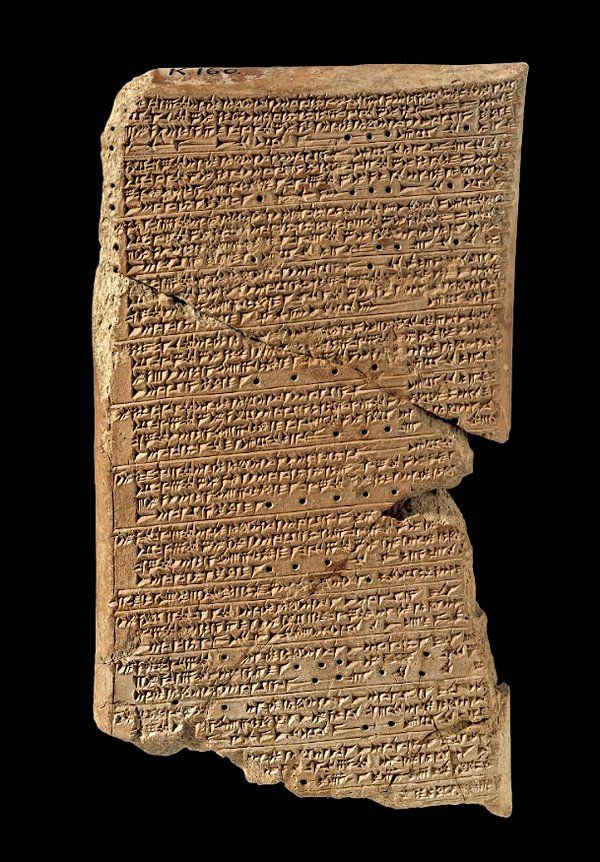
In the age in which Mark of Ruin begins, books and paper have not yet been invented in Aeris. People keep written records on stone tablets. Most stories reach them through another person’s voice.
A village can remember a war without possessing a written account of it. Its history might survive in a hunter’s warning, a grandmother’s recitation, a funeral lament, or a song everyone knows well enough to correct the singer. What a community remembers depends on the people who remain to tell it.
How stone tablets work
Also called memory tablets, ledger stones, or archive slabs, tablets are flat pieces of prepared stone. Common examples are cut from gray limestone or dark basalt. An archive slab is roughly the size of a large cutting board; a personal tablet can be small enough to carry in one hand. Leather edging protects the corners of carry-tablets, while thicker field tablets withstand the knocks of travel.
Writing is scored into the surface with an iron stylus or a trained scribe’s copper-tipped tool. A thin mineral wash darkens the grooves, making the marks easier to read in poor light. The words remain where they were carved. Reading an ordinary tablet requires no magic.
Every inscription takes space and work. A short agreement, a list of names, or a map can fit on a single surface. A long record occupies several tablets, kept together in a known order. Corrections require working the stone again; a damaged corner can take part of a sentence with it. Even a durable record can become difficult to read as its grooves wear and its mineral wash crumbles away.
Archives therefore occupy real space. Shelves hold slabs rather than bound volumes, and finding a passage depends on knowing which stone carries it. Copying a record means inscribing another surface. Knowledge can be preserved for generations, but moving a large collection is a substantial undertaking.
Who owns tablets?
Tablets belong to people at every level of society. Stone-cutters produce blanks in towns and cities, and traders carry them between settlements. Their manufacture is not controlled by a single faction.
Households and village record-keepers use them for accounts, births, deaths, and agreements that need to outlast the people who witnessed them. A household might keep only a few useful stones, while a village’s accumulated records require a dedicated collection.
Merchants, hunters, and travelers carry smaller tablets for debts, contracts, maps, routes, and field notes. These are working objects, handled often and built for practical use.
Temples and the Tabulari maintain larger archives. Temple scribes preserve genealogies, observances, and institutional history. The Tabulari’s Parish Counters carry field tablets during their rounds, while Collators organize archive slabs and compare records gathered from different communities. Their work depends on turning scattered inscriptions into a record that can be consulted across generations.
Arcanists and Arcanum Tenebris use tablets for research, instruction, correspondence, and mission notes. Jorian and Merra carry personal tablets, and students use them during training. The Arcanum’s accumulated knowledge rests in collections of stone, including older pieces worn by years of handling.
An arcanist can also inscribe a tablet by tracing the surface with a fingertip while channeling a thin thread of Weave-light. The magic cuts clean, dark grooves into the stone. It changes the method of writing; the inscription still occupies a physical surface. Beyond the refuge of other arcanists, using that method risks revealing the forbidden power behind it.
Most stories are spoken
Tablets preserve the things a community decides must be fixed in writing. Much of its imaginative life remains oral: legends, songs, family histories, accounts of hunts, and stories told beside the hearth.
Repetition helps those stories survive. A familiar rhythm holds a sequence of events together. A repeated phrase reminds the teller what comes next. Listeners remember enough to notice an omission, and children learn a story long before they can read an inscription.
That shared memory allows stories to travel without anyone carrying a slab. It also allows them to change. One village remembers the courage of a hunter; another remembers the people his courage failed to save. A temple’s telling can give a god the credit that a family’s telling gives to a mortal.
Written records and spoken accounts live alongside one another. A tablet might preserve a person’s name and the date of their death. The people who knew them preserve their jokes, their mistakes, and the sound of their voice. Losing a storyteller can mean losing details that were never carved anywhere.
The later invention of memory spheres
Memory spheres emerge later in Aeris’s history as a separate invention. They record events through what a person sees, allowing that witnessed view to be preserved and replayed. They do not exist as a routine function of the tablets used in the novel’s opening age.
The sphere’s view is limited to the witness’s own. It can show the doorway they watched, but nothing happening behind it. If they turn away at the crucial moment, the event outside their sight remains unrecorded. A sphere cannot move around a scene to reveal a better angle or show what another person was seeing.
Nor does a visible record reveal someone’s thoughts or motives. It preserves an expression, a gesture, an action. Understanding what those things meant still requires judgment. Two witnesses can preserve different views of the same event, each containing something the other missed.
The invention changes what can survive a witness’s death. Future generations can see a moment that once would have reached them only through a retelling. Yet the questions remain familiar: who was there, where were they looking, and what lay beyond their sight?
Stay for the next story.
Get a short email when I share new stories, novel excerpts, world notes, or blog posts.
Choose your alerts after signing in.
Unsubscribe anytime.
Comments
Share your thoughts. Please keep it respectful and flag spoilers.
Sign in to your reader account to comment or reply. Everyone can read the discussion.
You can remove comments as the author.
Loading comments…